ddos
ddos
ddos
NoName057(16) Strikes Japan: 12 Critical Transport and Banking Gateways Targeted
> By Clara | Aug 27, 2026 | 3 min read
Pro-Russian hacktivist collective NoName057(16) has escalated its cyber warfare operations across East Asia as NoName057(16) strikes Japan, coordinating massive Layer 7 flood waves against twelve critical banking, regional transport, and government portals.

Operating under their signature #TimeOfRetribution and #OpJapan campaign tags, the syndicate launched coordinated volumetric and application-layer distributed denial-of-service assaults. The targeted digital properties included municipal transportation gateways, government procurement platforms, shipbuilding registries, and subdomains of major Japanese financial institutions.
Target Matrix and Sector Impact as NoName057(16) Strikes Japan
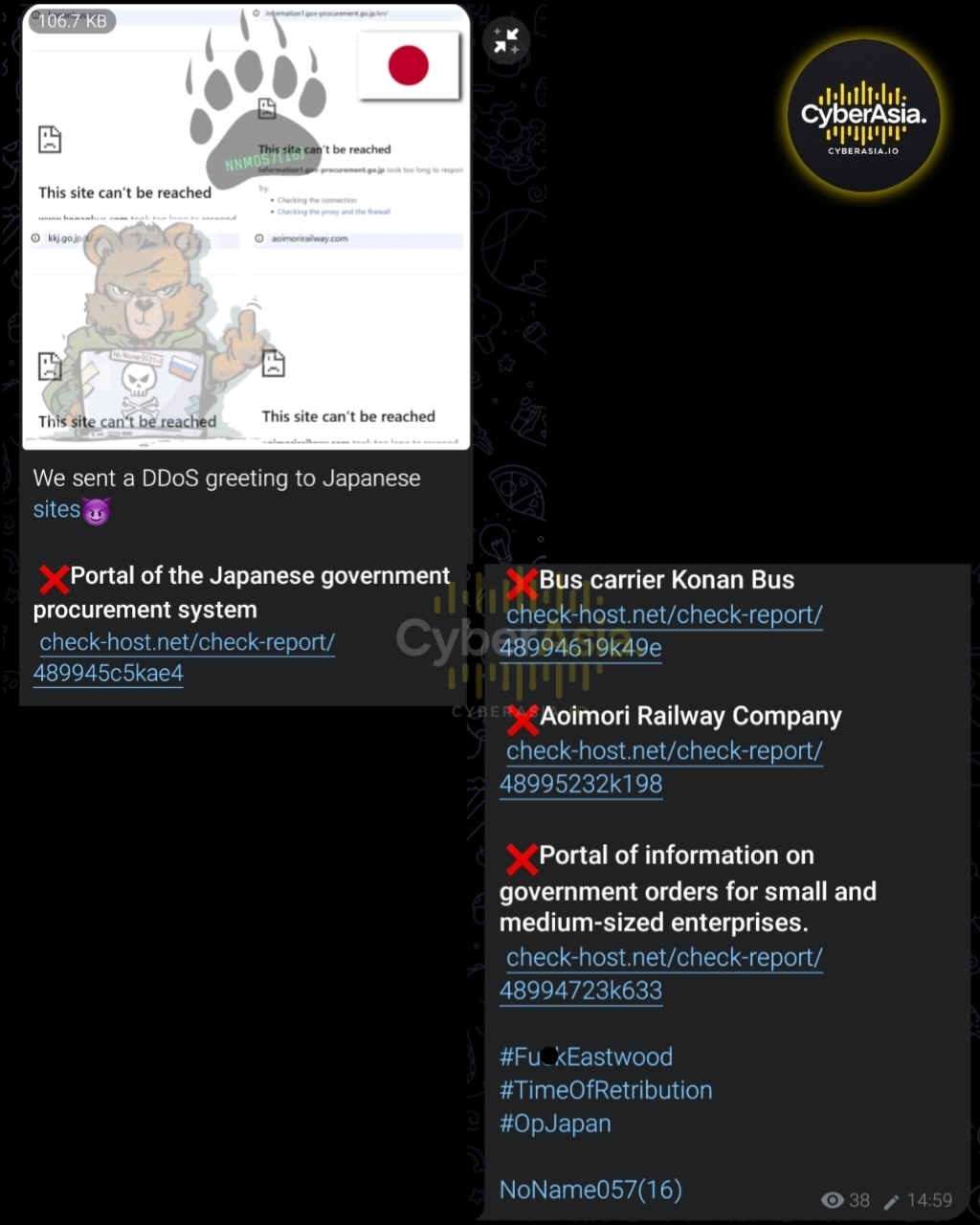
Technical telemetry released via check-host.net documented widespread service degradation. Target responses fell into three distinct failure categories: “took too long to respond” (indicating server socket exhaustion), “dead by ping” (ICMP/network flood saturation), and “closed by geo” (emergency geographic IP filtering enacted by defenders).
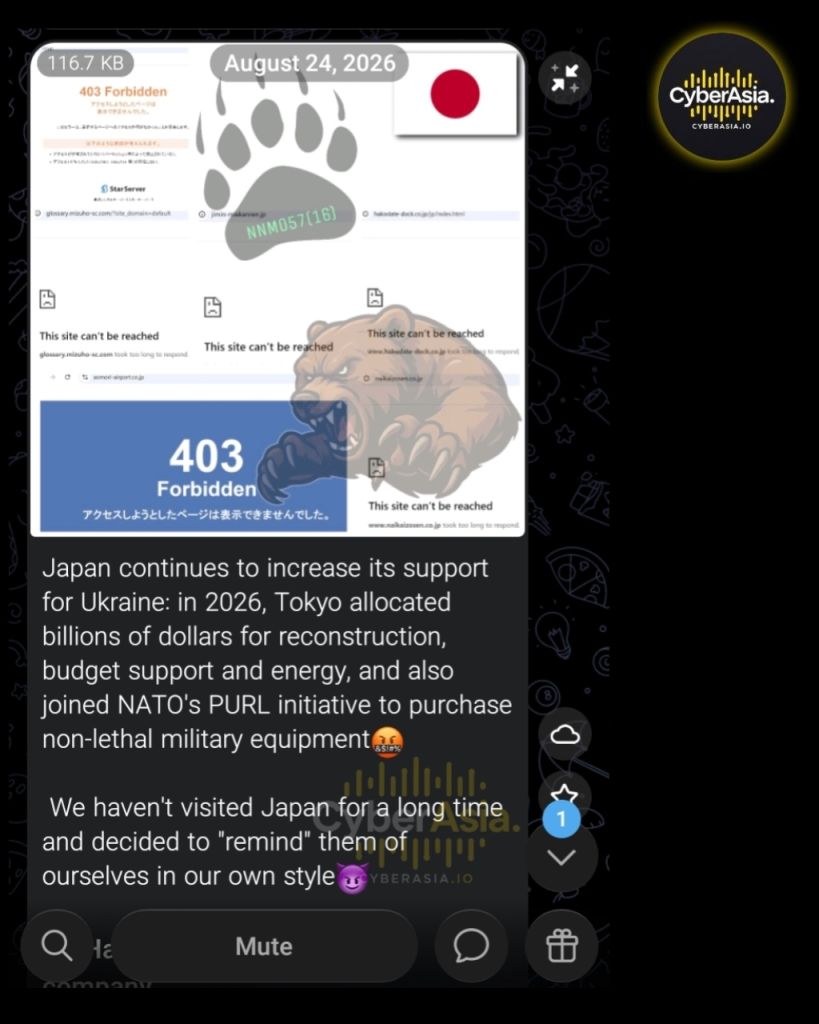
In the public transit sector, regional railway operator Aoimori Railway and transit provider Konan Bus in northern Japan suffered temporary passenger schedule query outages. Furthermore, web portals associated with Aomori Airport registered immediate geo-blocking barriers to curtail international traffic surges.
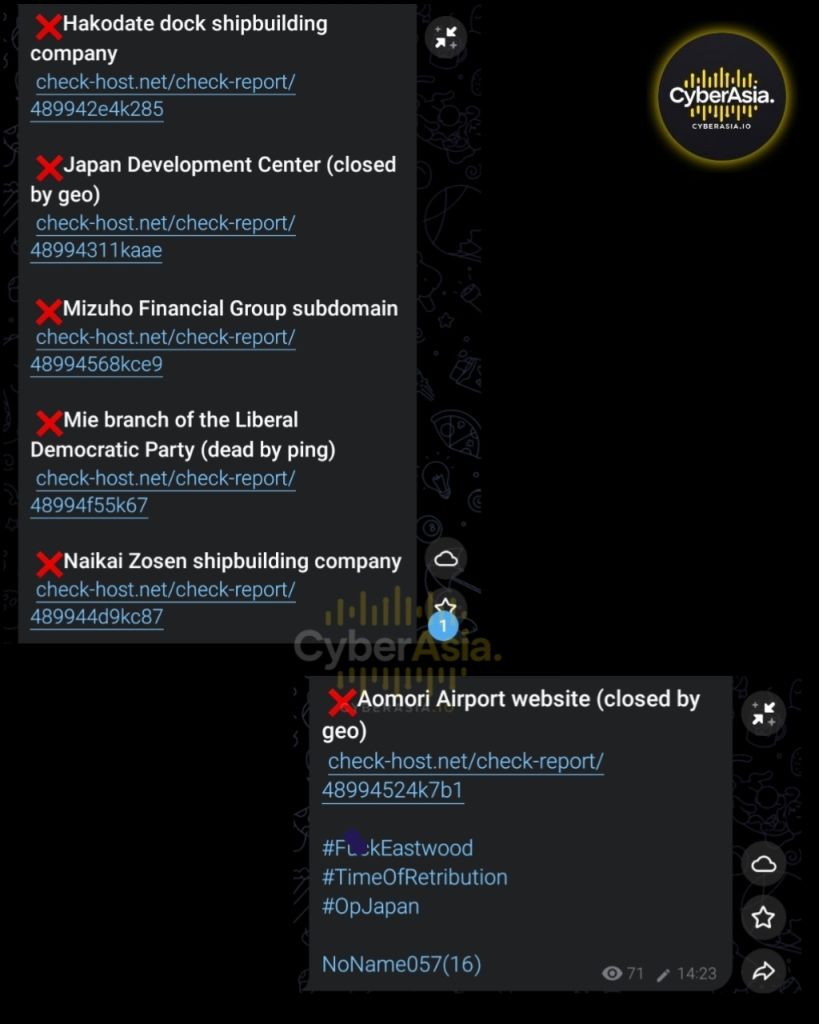
Strategic maritime manufacturing targets included heavy shipbuilders Hakodate Dock and Naikai Zosen. In the financial domain, a subsidiary subdomain of megabank Mizuho Financial Group experienced transient connection instability, though core transaction ledgers and customer banking portals remained completely unbreached.
Attack Tooling: DDOSIA Crowdsourced Botnet Framework
The operational mechanism driving the offensive relies on NoName057(16)’s proprietary crowdsourced botnet framework, DDOSIA. The platform distributes encrypted attack configuration files across thousands of volunteer host machines across multiple geographic regions, rewarding participants via cryptocurrency payouts based on attack verification statistics.

DDOSIA generates high-intensity HTTP/HTTPS requests with rotating User-Agent strings and proxy nodes to simulate organic browser traffic. By concentrating requests against non-cached dynamic query endpoints, the botnet exhausts origin worker pools, forcing network administrators to deploy defensive geo-restrictions.
Geopolitical Drivers Behind the Offensive
Statements released by NoName057(16) explicitly cited Tokyo’s ongoing participation in international financial aid packages for Ukraine and involvement in the NATO-sponsored Prioritized Ukraine Requirements List (PURL) initiative. This alignment reinforces the group’s tactical cadence of using cyber harassment against allied nations providing material support to Kyiv.
Frequently Asked Questions
Q1: Were core banking records or passenger payment systems breached in Japan?
No. Independent network telemetry confirms that all attacks were restricted to external Layer 7 availability disruption on public-facing marketing and information sites. Core transactional databases, passenger clearing houses, and internal banking mainframes were not compromised.
Q2: How does the DDOSIA framework bypass standard edge firewalls?
DDOSIA utilizes volunteer client nodes situated across residential and commercial ISP networks worldwide, making basic IP blacklisting ineffective. The software generates valid TLS handshakes and emulates modern browser request headers, requiring behavioral Layer 7 inspection to filter effectively.
Q3: What defense architectures successfully mitigate DDOSIA flood campaigns?
Critical infrastructure operators must deploy cloud-native DDoS mitigation scrubbers, enforce Challenge/Response verification (Turnstile/CAPTCHA) during alert states, configure aggressive rate-limiting on search and dynamic form endpoints, and restrict administrative portals behind private VPNs.
This report is compiled strictly for cyber threat intelligence, defensive engineering, and educational research purposes based on verified open-source data and network telemetry. CyberAsia urges critical infrastructure defenders to implement recommended edge mitigation protocols and never engage in unlawful network stress activities.
Disclaimer: The information presented in this threat intelligence report is for educational and cybersecurity research purposes only. CyberAsia reports on cyber incidents to help organizations understand and defend against emerging threats. We do not provide hacking instructions, host stolen data, or endorse illegal activities.
> INTELLIGENCE_NOTICE
The report above detailing NoName057(16) Strikes Japan: 12 Critical Transport and Banking Gateways Targeted is part of the CyberAsia public archive. For organizations requiring real-time attack telemetry, check-host latency records, and edge firewall mitigation strategies for ddos incidents, please refer to our Secure Drop or contact the research desk.