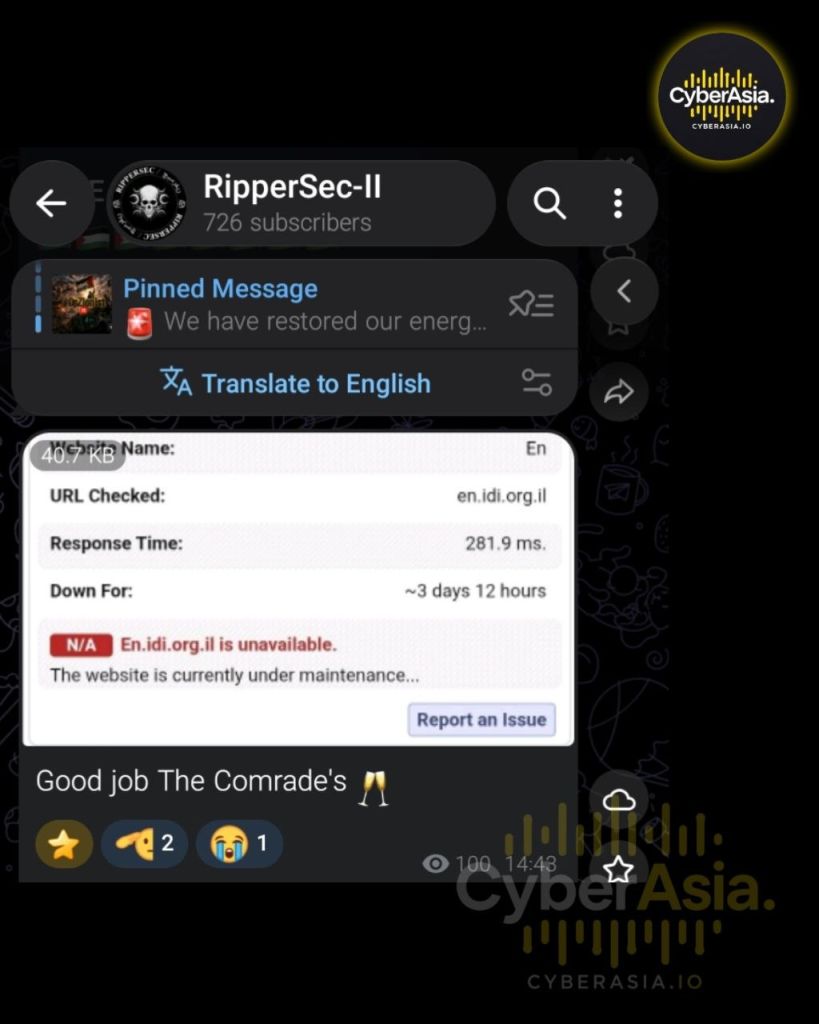
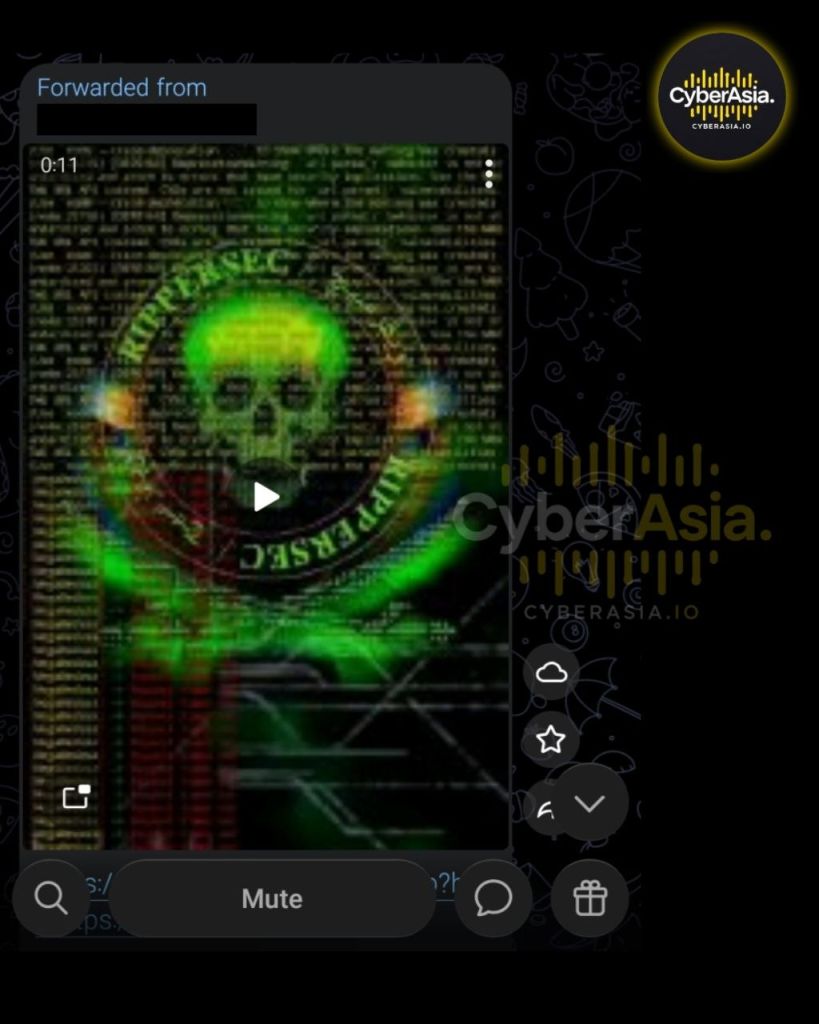
Pro-Palestinian hacktivist group RipperSec, through its faction The Comrade’s Group, redirected its campaign toward one of Israel’s most respected independent research institutions , and the site is now confirmed unreachable.
Desk CyberAsia.io
Source Telegram @RipperSecDirect, open-source technical indicators, direct check of the target site
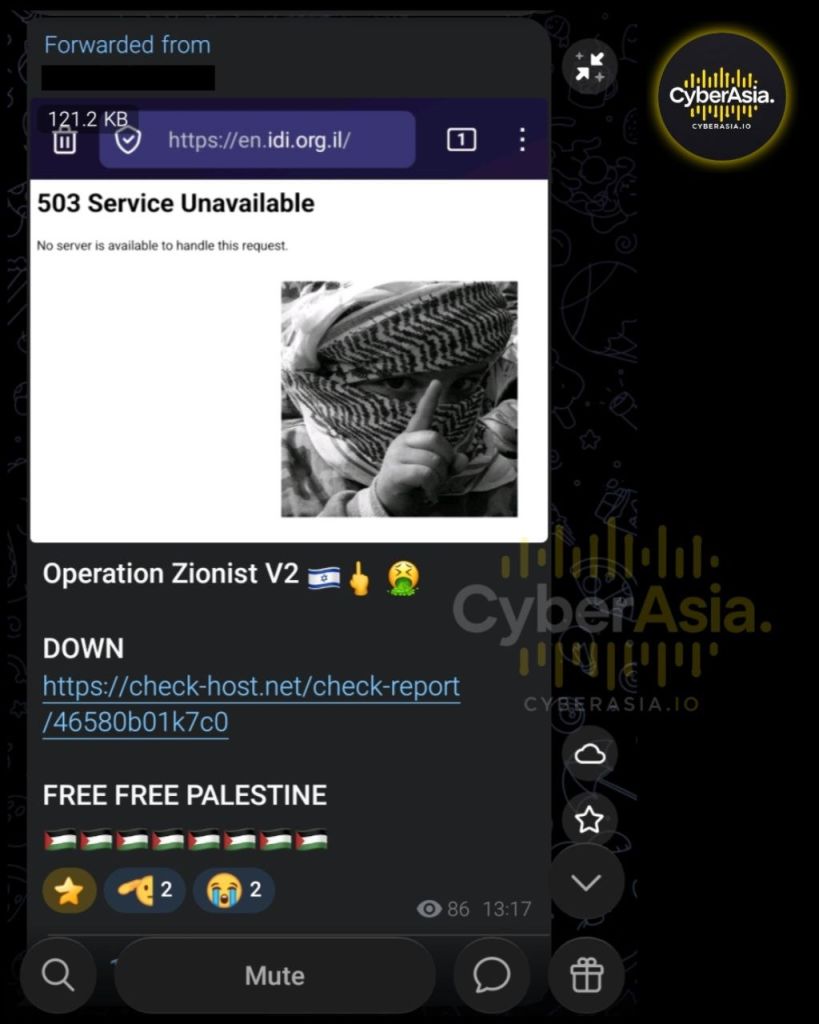
Verification Target site returns a 503 Service Unavailable error on access
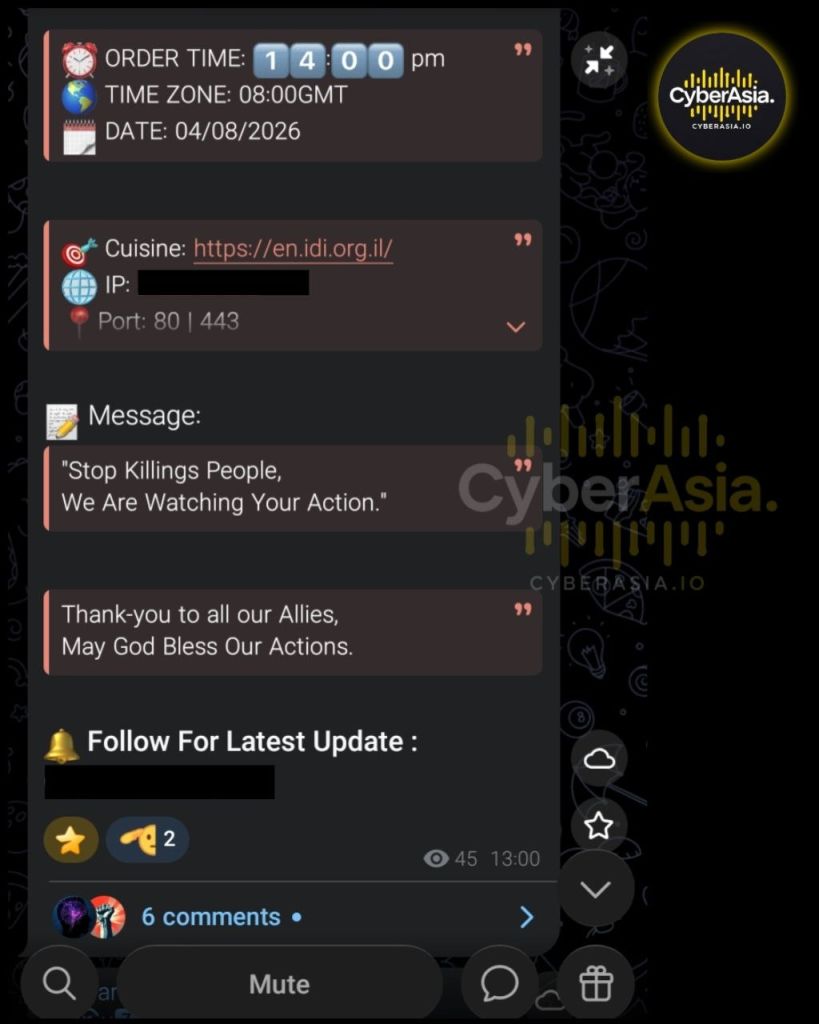
Technical indicators point to a direct access attempt against the Israel Democracy Institute’s website, with ports 80 and 443 showing as open. The action was reportedly ordered at 14:00 local time (08:00 GMT) on August 4, 2026.
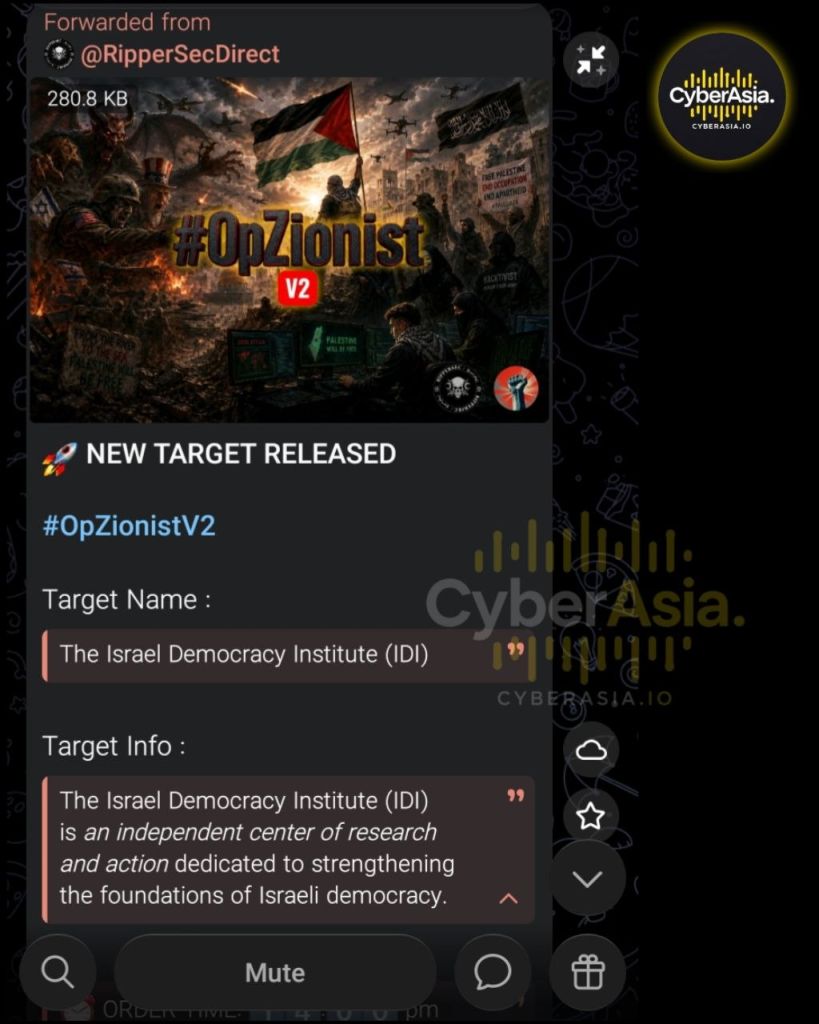
On its official Telegram channel, @RipperSecDirect, the group , including The Comrade’s Group , pushed out a statement that quickly went viral. The threatening language is nothing new; it’s the same rhetoric the group has used across every prior #OpZionist operation. What’s different this time is the target: a Jerusalem-based think tank the group has never struck before.
“Stop Killings People, We Are Watching Your Action.”
“Thank-you to all our Allies, May God Bless Our Actions.”
, RipperSec & The Comrade’s Group, posted to Telegram channel @RipperSecDirect
Who Is Affected
The Israel Democracy Institute (IDI) is one of Israel’s most respected and independent research organizations. Founded in 1991, it operates entirely outside government control, producing high-impact policy research, public opinion surveys, and analysis on democracy, elections, and security. Its findings shape policy debate both inside Israel and abroad.
Why It Matters
IDI has, until now, stayed off the radar of hacktivist campaigns. But RipperSec and The Comrade’s Group now appear to have placed the institute on their target list. The timing looks deliberate , as geopolitical tensions rise, politically motivated groups are ramping up digital operations against the very institutions that monitor and document those conflicts.
No data breach has been confirmed so far, but the group’s typical operating pattern suggests something larger may be in preparation.
Threat Profile: RipperSec & The Comrade’s Group
RipperSec is a pro-Palestinian hacktivist group that has been active since June 2023, specializing in:
Large-scale DDoS attacks
Website defacements
Data leaks
The Comrade’s Group is a recognized faction within the RipperSec network, operating openly on Telegram with thousands of members and frequently collaborating with other pro-Palestinian cyber groups. The group’s motivation is purely political and ideological , it openly labels its targets as “Zionist” entities and frames every attack as a moral duty.
Potential Consequences
If the operation escalates, the Israel Democracy Institute could face:
Repeated site outages that block public access to its research
Political pressure on policymakers who rely on IDI’s data
A broader chilling effect on Israeli civil-society research
This isn’t just another hacktivist stunt. It marks the first time a major politically motivated group has directly targeted a core democratic research institution.
Current Status
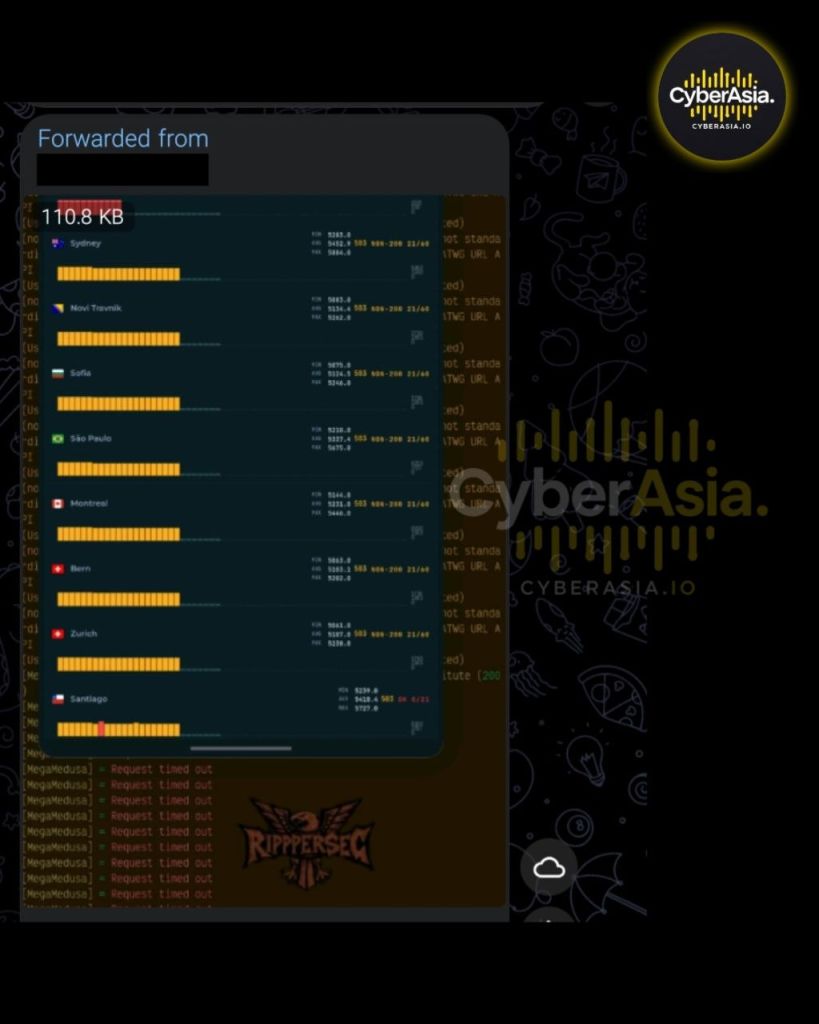
What began as a probing-stage operation has now produced a measurable effect: the Israel Democracy Institute’s official site is returning a 503 Service Unavailable error on access, indicating the server is no longer able to handle incoming requests. The pattern is consistent with the DDoS tactics RipperSec has relied on in past campaigns.
So far there’s no report of a data leak or a defaced homepage , the confirmed impact is limited to a service outage. IDI has not yet issued a public statement addressing the incident. Based on the group’s past pattern, further claims or updates are likely to appear on its Telegram channel as the situation develops.
What Organizations Should Do Now
Immediately enable advanced DDoS protection (Cloudflare, Imperva, or a comparable commercial service)
Monitor your domain and web traffic around the clock
Maintain offline backups of all research and policy documents
Prepare a response plan for a possible full defacement or data-leak campaign
Bottom Line
The Israel Democracy Institute’s website is now confirmed down with a 503 error, marking the first tangible escalation in the #OpZionistV2 campaign. RipperSec and The Comrade’s Group have demonstrated the ability to disrupt one of Israel’s most respected democracy research institutions , and based on the group’s past pattern, this may only be the start.
This article is based on publicly available information from the threat actor, open-source technical indicators, and a direct check of the target site’s status, which returned a 503 Service Unavailable error. The precise cause of the outage (DDoS, server overload, or another factor) has not been independently verified, and there is no confirmation of any data leak.
Mitigation & Prevention Strategies
To defend against advanced Layer 7 and volumetric DDoS attacks observed in these campaigns, organizations should implement the following defensive postures:
Edge Protection: Deploy robust Web Application Firewalls (WAF) and Anti-DDoS solutions configured to challenge anomalous request rates (e.g., CAPTCHA or JS challenges) before they hit origin servers.
Geographic Rate Limiting: If the threat actor originates from or utilizes botnets concentrated in specific regions, enforce geo-blocking rules for non-essential traffic.
Infrastructure Scaling: Ensure load balancers and auto-scaling groups are optimized to absorb sudden traffic spikes while maintaining core service availability.
Disclaimer: The information presented in this threat intelligence report is for educational and cybersecurity research purposes only. CyberAsia reports on cyber incidents to help organizations understand and defend against emerging threats. We do not provide hacking instructions, host stolen data, or endorse illegal activities.
> INTELLIGENCE_NOTICE
The report above detailing #OpZionistV2: RipperSec Claims New Cyber Attack on Israel Democracy Institute is part of the CyberAsia public archive. For organizations requiring real-time attack telemetry, check-host latency records, and edge firewall mitigation strategies for ddos incidents, please refer to our Secure Drop or contact the research desk.
Contains information related to marketing campaigns of the user. These are shared with Google AdWords / Google Ads when the Google Ads and Google Analytics accounts are linked together.
90 days
__utma
ID used to identify users and sessions
2 years after last activity
__utmt
Used to monitor number of Google Analytics server requests
10 minutes
__utmb
Used to distinguish new sessions and visits. This cookie is set when the GA.js javascript library is loaded and there is no existing __utmb cookie. The cookie is updated every time data is sent to the Google Analytics server.
30 minutes after last activity
__utmc
Used only with old Urchin versions of Google Analytics and not with GA.js. Was used to distinguish between new sessions and visits at the end of a session.
End of session (browser)
__utmz
Contains information about the traffic source or campaign that directed user to the website. The cookie is set when the GA.js javascript is loaded and updated when data is sent to the Google Anaytics server
6 months after last activity
__utmv
Contains custom information set by the web developer via the _setCustomVar method in Google Analytics. This cookie is updated every time new data is sent to the Google Analytics server.
2 years after last activity
__utmx
Used to determine whether a user is included in an A / B or Multivariate test.
18 months
_ga
ID used to identify users
2 years
_gali
Used by Google Analytics to determine which links on a page are being clicked
30 seconds
_ga_
ID used to identify users
2 years
_gid
ID used to identify users for 24 hours after last activity
24 hours
_gat
Used to monitor number of Google Analytics server requests when using Google Tag Manager