ddos
ddos
ddos
TheGarudaEye Attacks QFA Website: 3-Hour Critical Outage Hits Qatar Federation
> By Clara | Sep 10, 2026 | 4 min read
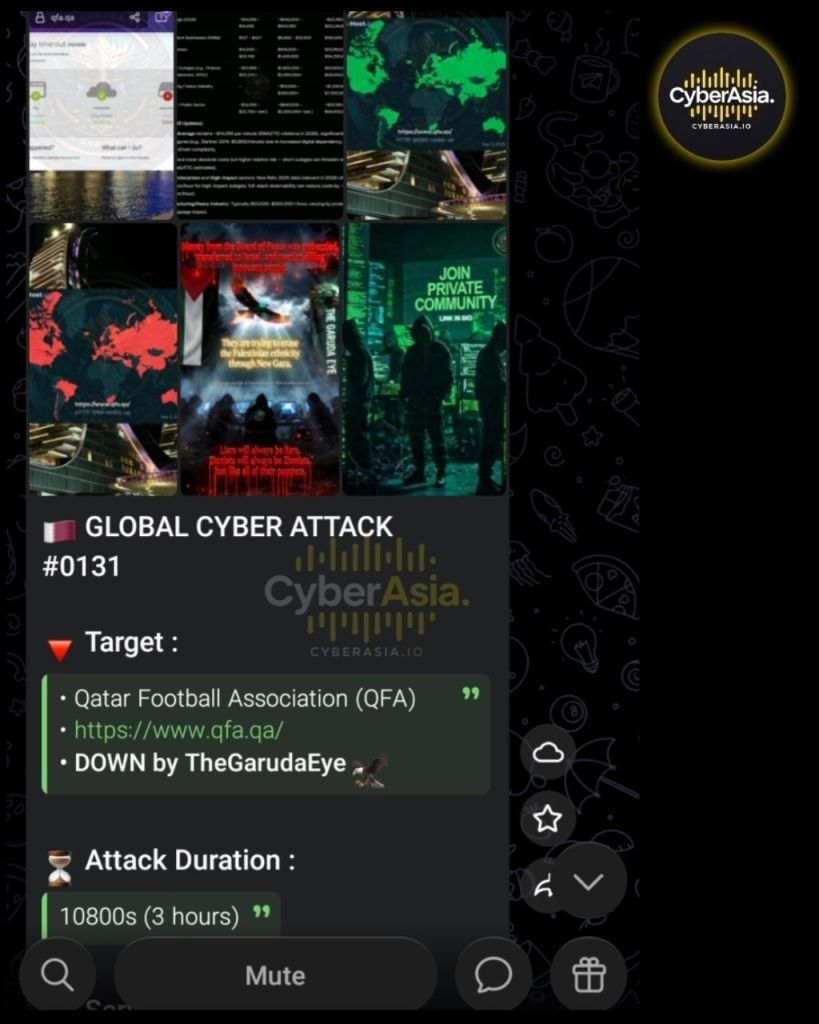
Hacktivist cell TheGarudaEye has intensified its geopolitical cyber campaign as TheGarudaEye attacks QFA website (qfa.qa), knocking the Qatar Football Association portal offline for over three hours through coordinated Layer 7 HTTP flood waves.

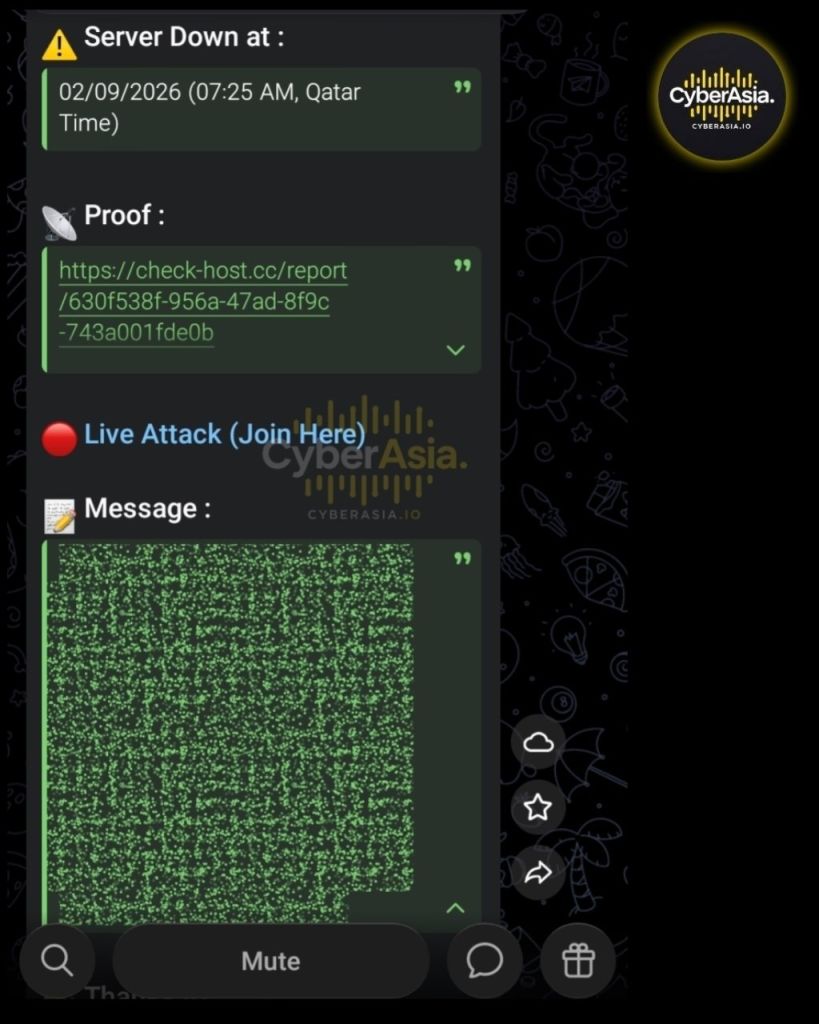
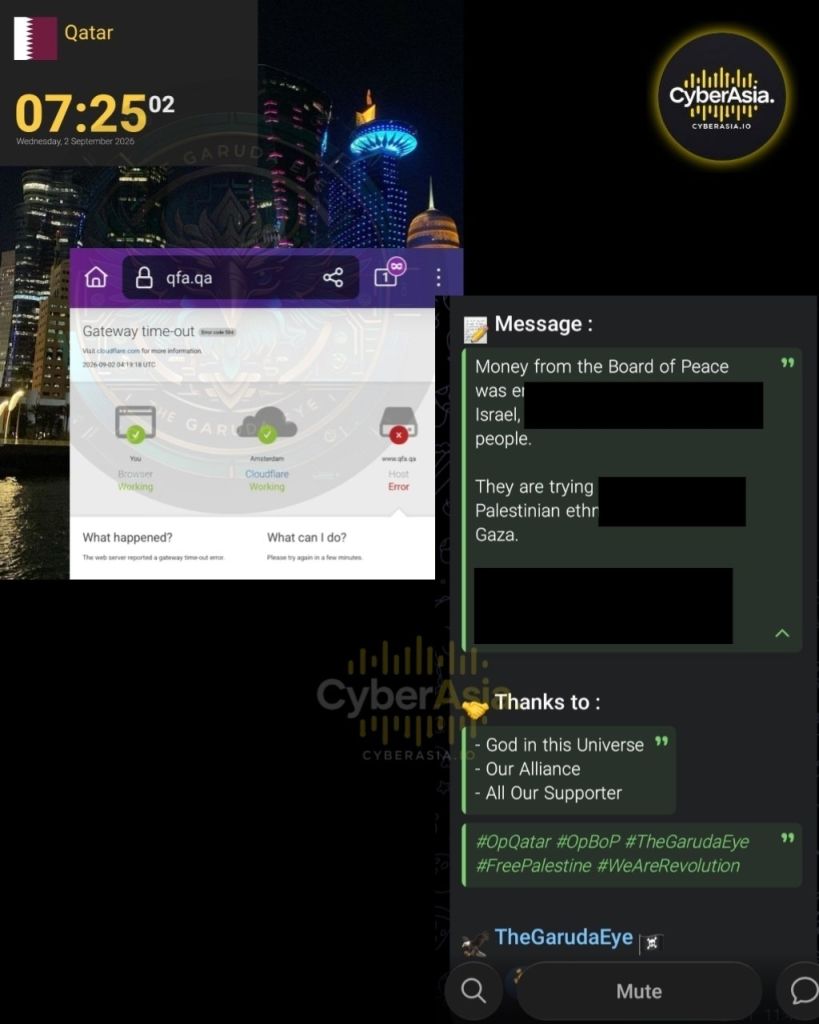
The service disruption began when visitors navigating to the federation’s official landing domain were met with persistent HTTP 504 Gateway Timeout notifications and Cloudflare Error 525 messages. The operational telemetry indicates that while Cloudflare edge proxy nodes absorbed initial volumetric packets, the origin web application server behind the shield failed to process application-layer connections within the mandated 15-second window.
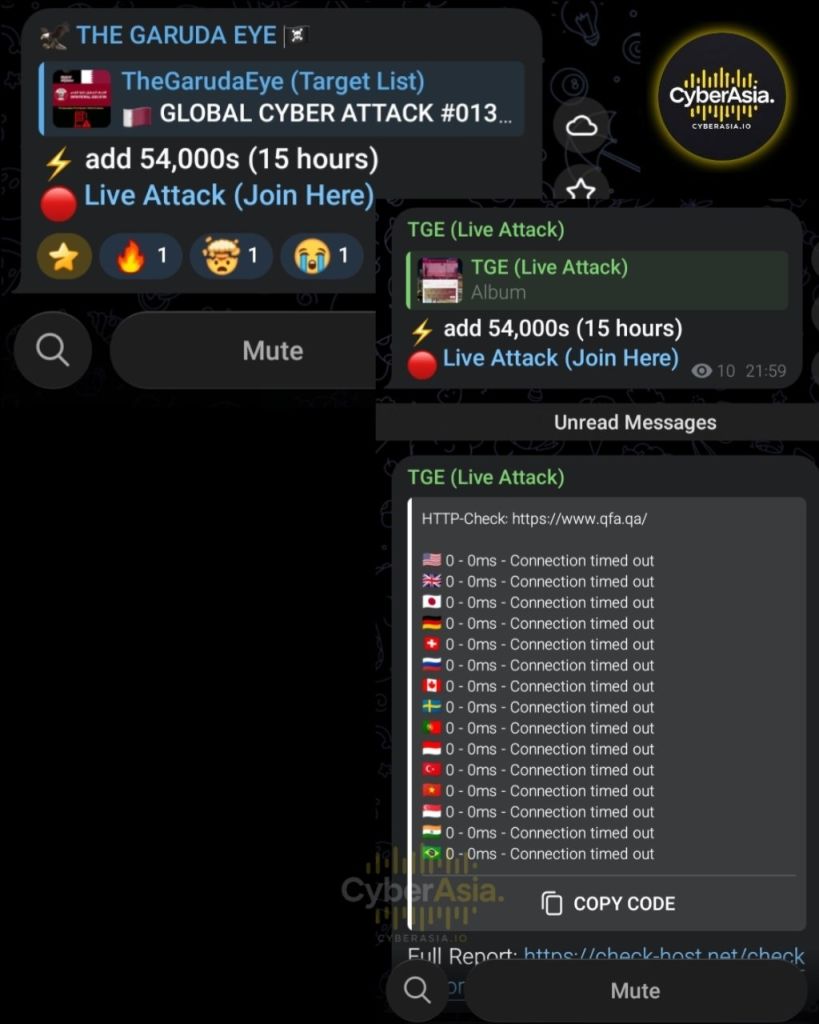
The offensive was formally claimed across private Telegram channels associated with TheGarudaEye threat collective. The initial operational bulletin, designated under the campaign code “GLOBAL CYBER ATTACK #0131,” claimed an initial assault duration of 10,800 seconds (3 hours). A subsequent status update extended the target disruption window to 54,000 seconds (15 hours), accompanied by live verification telemetry tracking origin server dropouts.
Multi-Region Telemetry as TheGarudaEye Attacks QFA Website
Independent multi-point network diagnostics gathered via check-host.net corroborate the claimed downtime. Probing nodes across fifteen sovereign jurisdictions, including the United States, United Kingdom, Japan, Germany, Switzerland, and Brazil, recorded total connection timeouts.
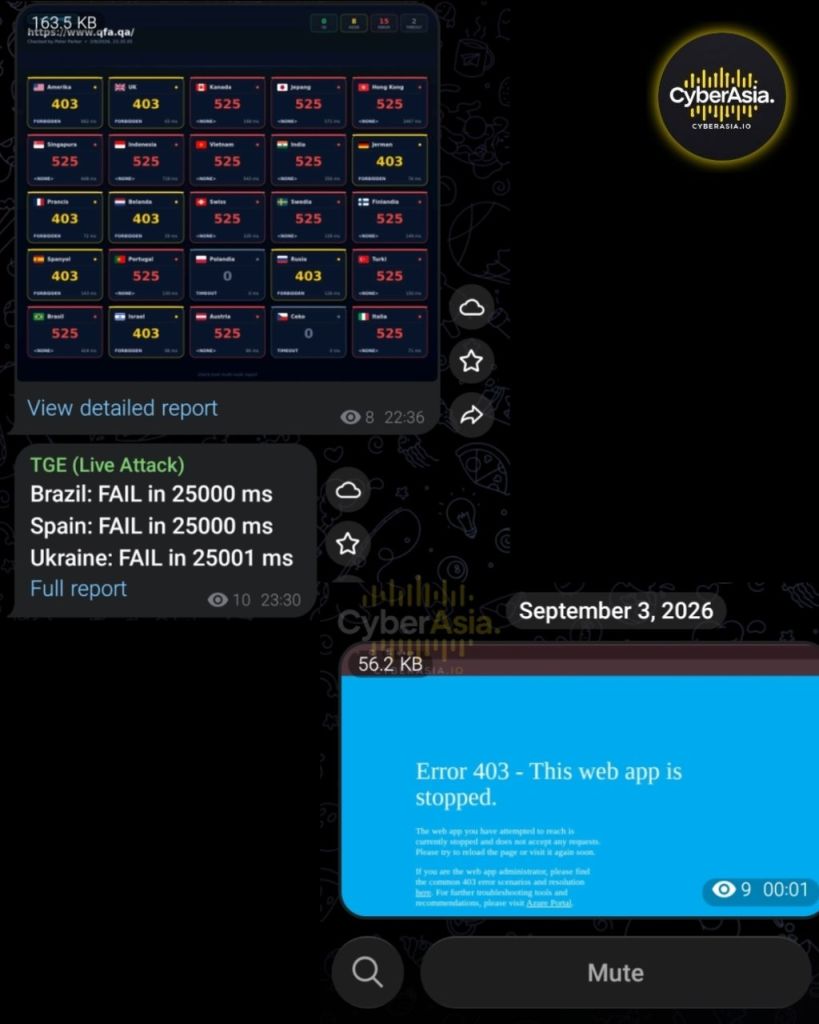
Detailed probe logs registered repeated 0-millisecond response latency flags, a definitive symptom of complete TCP connection termination. Subsequent scans conducted across 25 international test nodes demonstrated an evolving failure pattern: a mixture of HTTP 403 Forbidden blocks and Cloudflare Error 525 (SSL Handshake Failed) codes.
In high-availability web architectures fronted by CDN reverse proxies, this response divergence occurs when Layer 7 request floods exhaust origin worker threads. When the origin web server can no longer allocate CPU cycles to complete cryptographic TLS negotiations, edge nodes return Error 525. As automated rate-limiting policies engage, remaining requests are terminated with HTTP 403 challenge barriers.
Emergency Administrative Mitigations and Azure App Pausing
As the assault persisted into subsequent testing windows, defensive telemetry revealed an active administrative countermeasure. Diagnostic captures recorded a customized 403 landing screen declaring “This web app is stopped.” This specific notification is generated when enterprise network administrators manually pause a Microsoft Azure App Service or IIS application pool to prevent cascading server hardware exhaustion.
By intentionally isolating the public web presentation layer, systems engineers protected backend ticketing integrations, administrative databases, and player registration repositories from secondary compromise. Forensic analysis confirms that zero organizational data was exfiltrated, zero databases were breached, and zero administrative credentials were leaked during the attack.
Threat Actor Profile: TheGarudaEye and the OpBoP Campaign
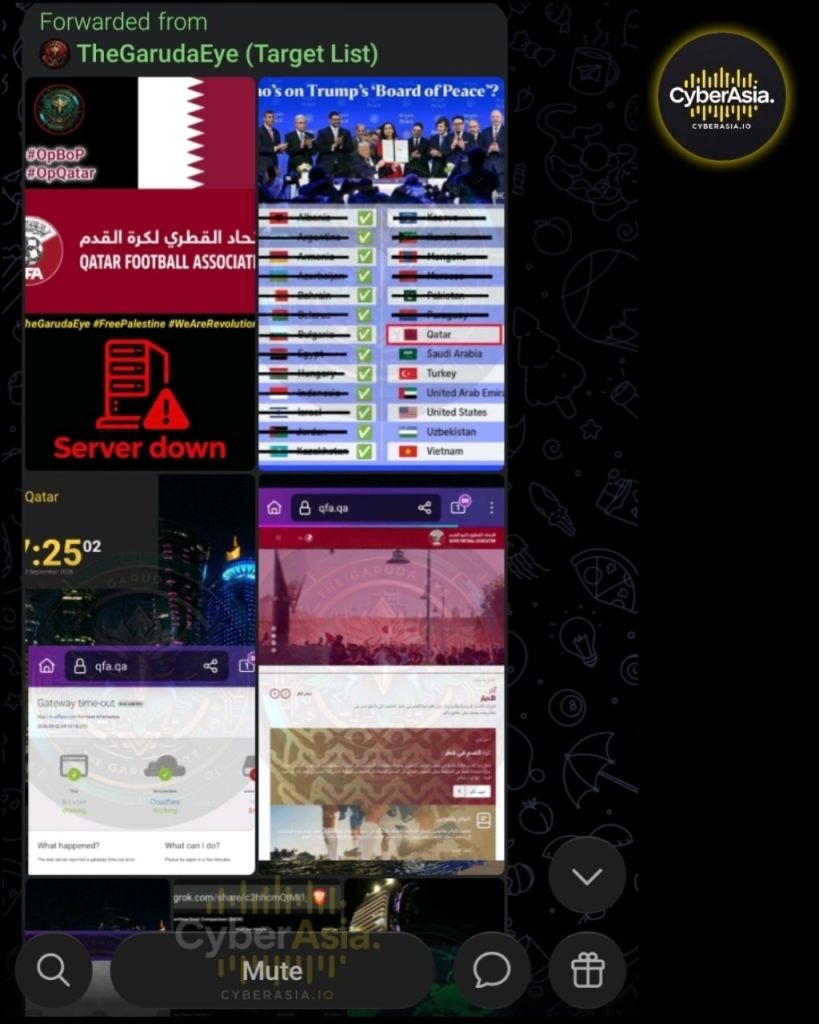
TheGarudaEye operates as an ideologically motivated hacktivist group utilizing symbolic campaigns including #OpBoP (Operation Board of Peace) and #OpQatar to target Gulf digital infrastructure.
The collective circulated an expansive target roster listing sovereign entities spanning the UAE, Saudi Arabia, Bahrain, Turkey, and the United States, positioning Qatar as the operational focal point. Despite high-profile rhetoric, observed attack toolchains remain restricted to commercial stressers and distributed HTTP botnets rather than bespoke zero-day exploits.
Frequently Asked Questions
Q1: Was match ticketing data or player registration PII compromised in the QFA attack?
No. Network telemetry verifies that the incident was exclusively an external Layer 7 distributed denial of service attack. Origin databases and transactional repositories remained isolated and suffered no unauthorized penetration.
Q2: Why did Check-Host display mixed 403, 504, and 525 codes during the incident?
As incoming HTTP connection volume fluctuated, the hosting infrastructure shifted dynamically between automated WAF challenge drops (403), origin web daemon response timeouts (504), and cryptographic TLS socket exhaustion (525).
Q3: How do sports federations mitigate sustained Layer 7 application floods?
Organizations must enforce Cloudflare Under Attack Mode (UAM) or Turnstile challenge gates, configure granular per-IP rate limits on dynamic scripts, cloak origin IP addresses, and maintain emergency static caching rules on landing pages.
This report is compiled strictly for cyber threat intelligence, defensive engineering, and educational research purposes based on verified open-source data and network telemetry. CyberAsia urges sports federations and enterprise defenders to implement recommended edge mitigation protocols and never engage in unlawful network stress activities.
Disclaimer: The information presented in this threat intelligence report is for educational and cybersecurity research purposes only. CyberAsia reports on cyber incidents to help organizations understand and defend against emerging threats. We do not provide hacking instructions, host stolen data, or endorse illegal activities.
> INTELLIGENCE_NOTICE
The report above detailing TheGarudaEye Attacks QFA Website: 3-Hour Critical Outage Hits Qatar Federation is part of the CyberAsia public archive. For organizations requiring real-time attack telemetry, check-host latency records, and edge firewall mitigation strategies for ddos incidents, please refer to our Secure Drop or contact the research desk.