ddos
ddos
ddos
RipperSec Launch Attack Against Network School Due Ties With Israeli
> By Haider | Aug 04, 2026 | 3 min read
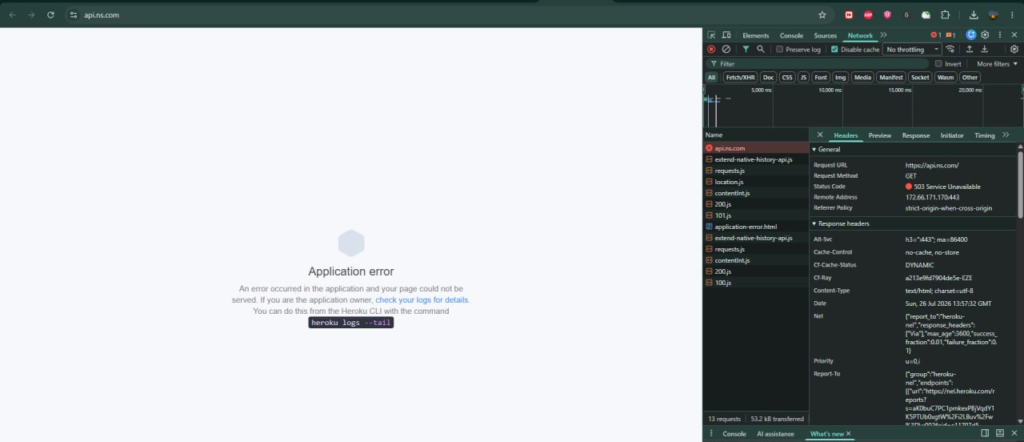
Note: Network School Api attacked by Zeus Stresser, the volunteer in RipperSec Group.1
Executive Summary
On July 26, 2026, at approximately 20:00 GMT+8, our threat intelligence team observed a Distributed Denial-of-Service (DDoS) incident targeting the primary infrastructure of Network School (ns.com). The attack was claimed by the ideologically driven hacktivist collective known as RipperSec. Utilizing standard Layer 7 HTTP flood techniques, the threat actors caused temporary service disruptions to infrastructure hosted behind Cloudflare’s Web Application Firewall (WAF).
Geopolitical Context and Actor Motivation
The cyberattack on Network School occurs against the backdrop of a highly publicized geopolitical controversy in Malaysia. In July 2026, the Network School a digitally connected community project founded by US investor Balaji Srinivasan in Forest City, Johor faced intense public and political scrutiny following allegations that Israeli nationals were participating in its programs.
Given Malaysia’s strict prohibition against Israeli passport holders and its strong pro-Palestine stance, the allegations triggered widespread public outrage and immediate government intervention, leading to the revocation of the school’s business licenses by local authorities.
RipperSec operates primarily within the pro-Palestine hacktivist sphere, specializing in retaliatory digital strikes against entities perceived to be harboring or collaborating with Israeli interests. Intercepted chatter on the group’s official Telegram channel (@RipperSecDirect) directly referenced the Forest City controversy. In their claim of responsibility, the threat actors stated: “Stop Killings People, We Are Watching Your Action.” The DDoS attack was executed as a punitive measure against the Network School for its alleged breach of local geopolitical sanctions.
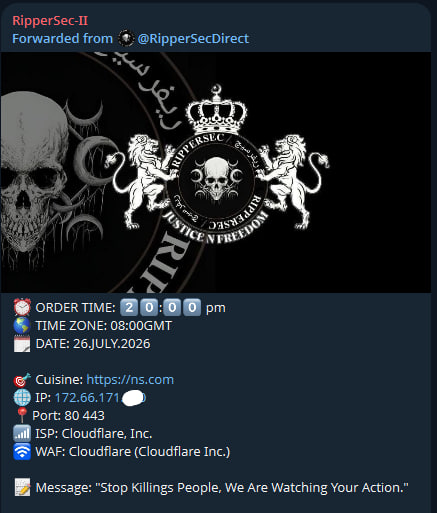
Figure 1: Attack telemetry and claim of responsibility broadcasted by RipperSec.
Threat Actor Profile: RipperSec
RipperSec, identifying with the slogan “Justice n Freedom,” is part of a growing ecosystem of decentralized hacktivist cells. Their operational footprint suggests a reliance on commercially available stresser services (booters) and decentralized botnets to conduct disruptive strikes. The group’s branding heavily utilizes anti-establishment iconography, including skulls and crossed weapons, signaling an aggressive posture toward entities they deem complicit in geopolitical conflicts.
The group primarily relies on website defacements and volumetric DDoS attacks. While these tactics require minimal technical sophistication, they are highly effective at generating media attention and enforcing political boycotts.
Technical Analysis: Tactics, Techniques, and Procedures (TTPs)
The observed RipperSec DDoS Attack employed basic application-layer (Layer 7) resource exhaustion techniques. The observed TTPs include:
- Targeted Ports: The attack concentrated on Port 80 (HTTP) and Port 443 (HTTPS), aiming at the application processing logic rather than the network pipeline.
- WAF Interaction: The botnet generated a high volume of HTTPS requests in an attempt to mimic human traffic and bypass initial JavaScript and CAPTCHA challenges utilized by Cloudflare, Inc.
- Resource Exhaustion: By forcing the backend servers to continuously process connections and database queries, the flood temporarily depleted CPU and RAM allocations, resulting in intermittent HTTP 502 (Bad Gateway) and 504 (Gateway Timeout) errors.
Indicators of Compromise (IoCs)
While botnet IP pools rotate frequently, network administrators should monitor for the following anomalies:
- Unusually high volume of
GET /requests from distinct global IPs within a narrow timeframe (e.g., >10,000 requests per IP per minute). - Targeted Endpoint:
172.66.1X.X
Mitigation Recommendations
Organizations operating in sensitive geopolitical environments should proactively review their DDoS mitigation postures. We recommend:
- Dynamic Rate Limiting: Implement strict, behavior-based rate limits on the application edge to drop requests that deviate from normal user patterns.
- Bot Management: Deploy bot mitigation solutions to differentiate between legitimate browser traffic and automated HTTP flooders.
- Threat Intelligence Integration: Continuously monitor hacktivist communication channels for early warning signs of impending attacks.
For comparative analysis on similar campaigns, refer to our previous intelligence brief on the Microsoft 365 disruption by the Iraqi 313 Team.
Mitigation & Prevention Strategies
To defend against advanced Layer 7 and volumetric DDoS attacks observed in these campaigns, organizations should implement the following defensive postures:
- Edge Protection: Deploy robust Web Application Firewalls (WAF) and Anti-DDoS solutions configured to challenge anomalous request rates (e.g., CAPTCHA or JS challenges) before they hit origin servers.
- Geographic Rate Limiting: If the threat actor originates from or utilizes botnets concentrated in specific regions, enforce geo-blocking rules for non-essential traffic.
- Infrastructure Scaling: Ensure load balancers and auto-scaling groups are optimized to absorb sudden traffic spikes while maintaining core service availability.
Disclaimer: The information presented in this threat intelligence report is for educational and cybersecurity research purposes only. CyberAsia reports on cyber incidents to help organizations understand and defend against emerging threats. We do not provide hacking instructions, host stolen data, or endorse illegal activities.
> INTELLIGENCE_NOTICE
The report above detailing RipperSec Launch Attack Against Network School Due Ties With Israeli is part of the CyberAsia public archive. For organizations requiring real-time attack telemetry, check-host latency records, and edge firewall mitigation strategies for ddos incidents, please refer to our Secure Drop or contact the research desk.