 Data Breach & Leak
~/ › Data Breach & Leak › article
Data Breach & Leak
PII Data Leaks: The Dark Web Economy Targeting Everyday Citizens
> By ChenHo | Aug 04, 2026 | 3 min read
Your full name, identification number, and current residential address are likely already circulating on a dark web forum for less than RM10. Following massive compromises in the regional telecommunications and government sectors, the commoditization of personal data has reached a point where individual privacy is effectively an illusion.
⚠️ THREAT INTELLIGENCE ADVISORY:
Recent threat intel observations confirm a significant surge in targeted social engineering attacks leveraging high-fidelity PII. Citizens must operate under the assumption that their primary contact data is already in the hands of malicious syndicates.

When organizations fail to protect Personal Identifiable Information (PII), the fallout is rarely felt by the corporation; the true cost is borne by the average citizen facing identity theft, unauthorized loans, and hyper-targeted scams.
Table of Contents
- Context / Motivation
- Technical Analysis: How PII is Weaponized
- Impact Assessment
- Mitigation Recommendations
Context / Motivation
Financially motivated threat actors and hacktivist collectives routinely target vulnerable databases containing vast amounts of citizen data. Whether the breach stems from a student PII exposure or a compromised municipal portal, the end goal is monetization.
Once extracted, this data is packaged into structured CSV or SQL formats and auctioned on prominent dark web marketplaces. The “buyers” are typically secondary syndicate groups specializing in financial fraud, who utilize this high-fidelity data to bypass basic identity verification checks.
Technical Analysis: How PII is Weaponized
Having your IC number and phone number exposed allows syndicates to execute highly sophisticated operations:
> COMPROMISED_DATA_RECORDS
- Targeted Phishing (Spear Phishing): Attackers no longer send generic “Dear Customer” emails. Using leaked PII, they craft messages citing your exact name, address, and recent transactions, drastically increasing the success rate of malicious links.
- Identity Fraud: Threat actors use your credentials to open unauthorized credit lines, apply for government subsidies, or register “mule” bank accounts for money laundering.
- SIM Swapping: Armed with your personal details, attackers can socially engineer telecommunications support staff into transferring your phone number to a new SIM card, granting them access to intercept banking 2FA/TAC codes.
The sheer volume of these leaks highlights systemic security failures in how entities store and encrypt sensitive citizen information.
Impact Assessment
The psychological and financial toll on victims is severe. Unwinding identity theft often takes months of bureaucratic navigation with banks, police, and credit bureaus. Furthermore, the constant barrage of targeted scam calls erodes public trust in digital communication entirely.
Mitigation Recommendations
Citizens must shift to a proactive defense posture regarding their personal data:
- Assume Compromise: Treat unsolicited calls citing your IC number or name with extreme suspicion. Official entities will rarely ask for verification of sensitive data over an outbound call.
- Enable MFA Everywhere: Relying on SMS TAC is no longer sufficient. Utilize app-based Authenticator tools (Google, Microsoft) for all critical accounts.
- Monitor Credit Reports: Regularly check your CCRIS or CTOS reports for unauthorized credit card applications or personal loans.
- Practice Data Minimization: Do not surrender your IC or phone number to random retail loyalty programs unless absolutely necessary.
For more insights into how underground ecosystems monetize data, review our analysis on dark web forum resilience.
> subscribe_to_intel
Join 5,000+ analysts. Get uncensored threat intelligence and breach alerts delivered directly to your inbox. Privacy Policy.
Mitigation & Prevention Strategies
Data breaches involving Personally Identifiable Information (PII) or sensitive corporate databases require immediate containment and long-term security overhauls:
- Database Hardening: Ensure databases (SQL, MongoDB, Elasticsearch) are never exposed directly to the public internet. Bind services to localhost or strict internal VPCs.
- Data Encryption: Implement robust encryption for data-at-rest. Even if threat actors exfiltrate database dumps, properly salted and hashed passwords minimize the blast radius.
- Credential Rotation: Following any suspected breach, force a global password reset for affected users and rotate API keys and service credentials immediately.
Disclaimer: CyberAsia is an independent Cyber Threat Intelligence (CTI) research organization. The information provided in this report is derived from public intelligence gathering, dark web monitoring, and threat actor claims. It is published strictly for educational purposes, defensive analysis, and public awareness. CyberAsia does not endorse, verify, or facilitate any cyberattacks or illegal activities.
> INTELLIGENCE_NOTICE
The report above detailing PII Data Leaks: The Dark Web Economy Targeting Everyday Citizens is part of the CyberAsia public archive. For organizations requiring real-time Indicators of Compromise (IoCs), YARA rules, and extended mitigation strategies for data breach & leak threats, please refer to our Secure Drop or contact the research desk.

> ABOUT_AUTHOR: ChenHo
> related_intel --suggest
Data Breach & Leak
 Data Breach & Leak
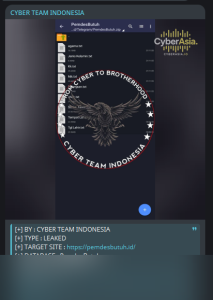
Data Breach: Cyber Team Indonesia Leaks Pemdes Butuh Citizen Records
> read Data Breach & Leak