 ddos
ddos
ddos
TheGarudaEye Takes Down Paraguay’s Immigration Server for 12 Hours
> By Clara | Aug 15, 2026 | 5 min read
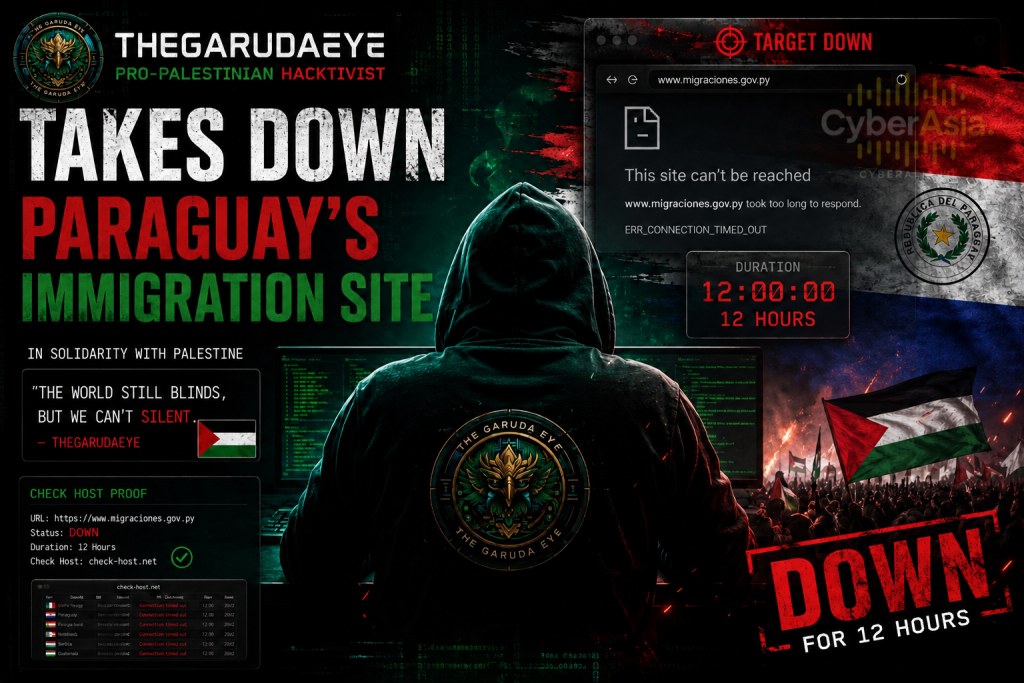
The official portal of Paraguay’s Dirección Nacional de Migraciones (DNM), migraciones.gov.py, suffered a major service disruption after hacktivist group TheGarudaEye launched a cyberattack against the agency’s digital infrastructure. The incident adds to a growing list of Latin American government websites targeted by politically motivated cyber campaigns in recent months.
Attack Timeline
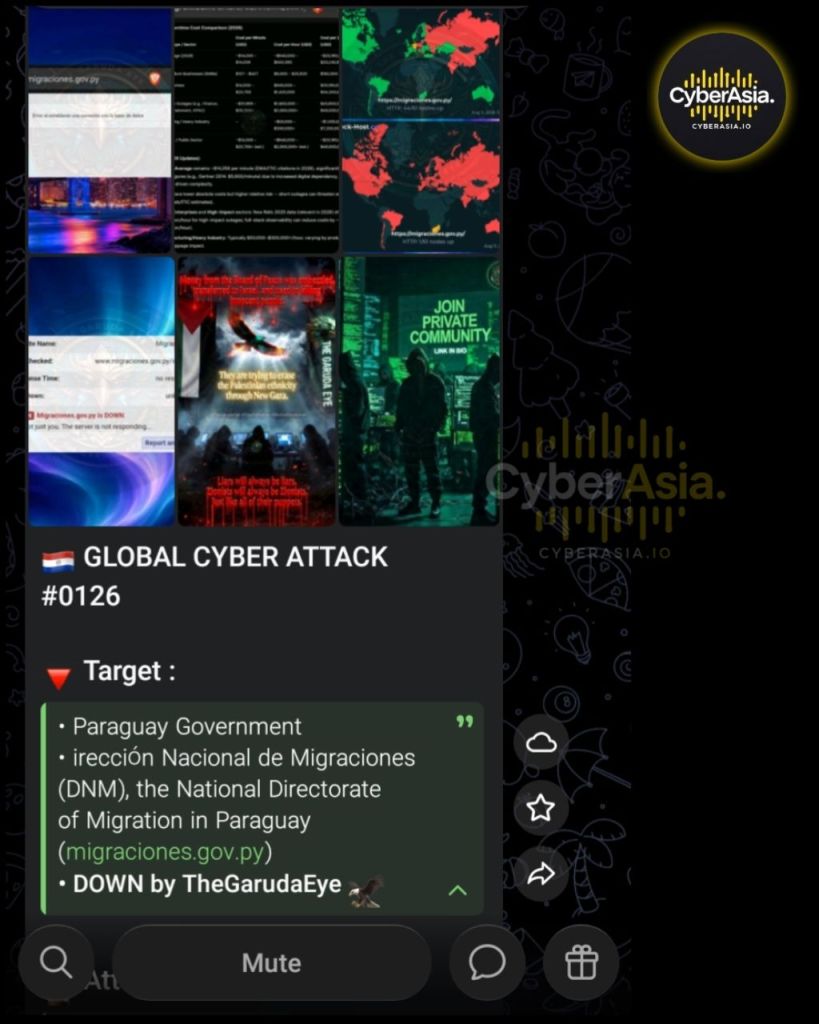
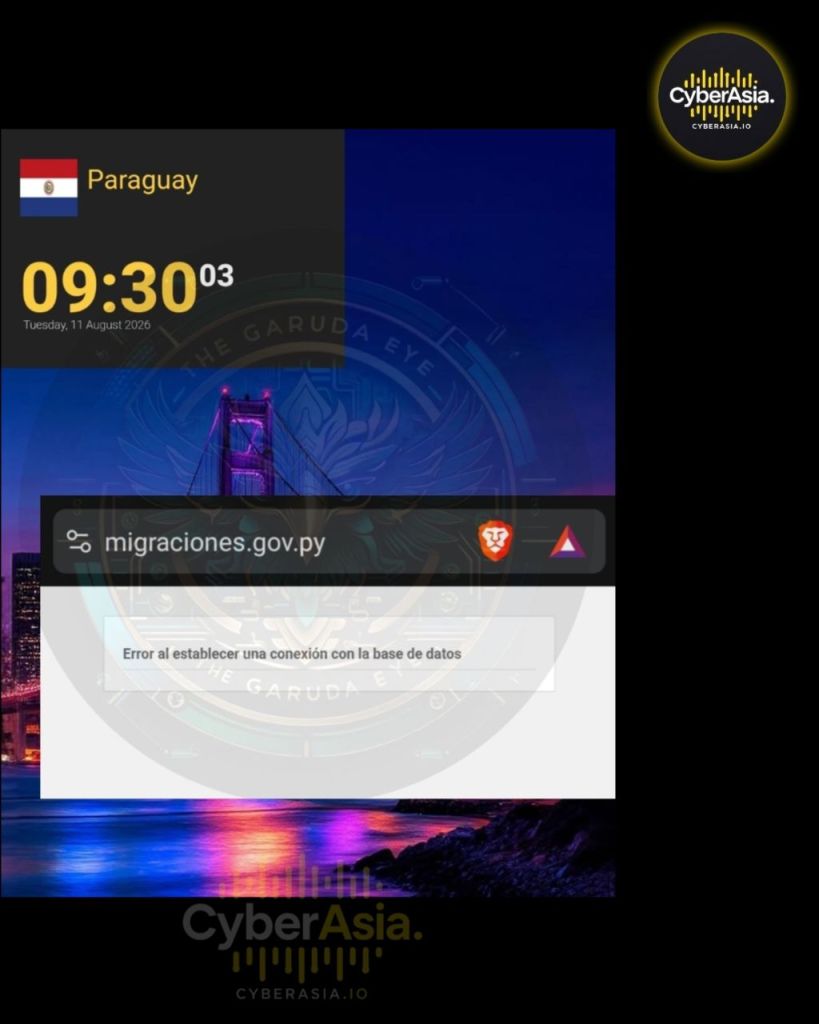
According to documentation circulated by TheGarudaEye through the group’s communication channels, the attack on migraciones.gov.py began on August 11, 2026, at 9:30 a.m. Paraguay time. Screenshots shared online show the DNM homepage displaying a Spanish-language error message, “Error al establecer una conexión con la base de datos” (“Error establishing a connection to the database”), indicating the server was no longer able to process database requests normally.
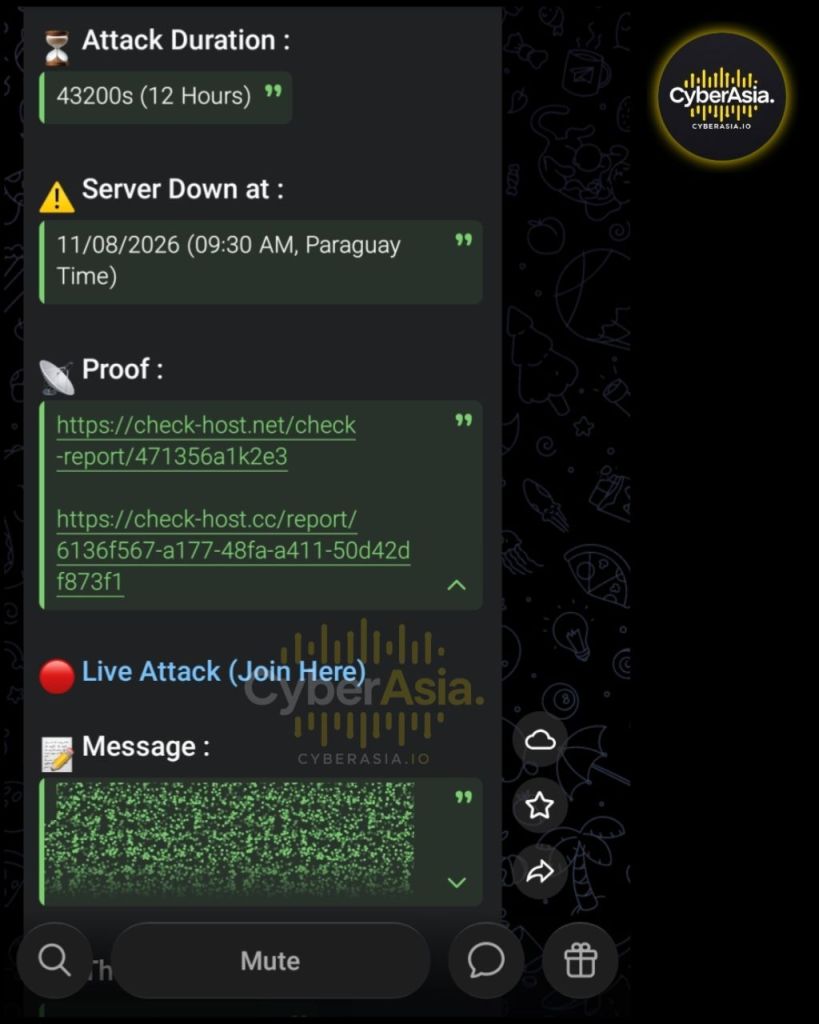
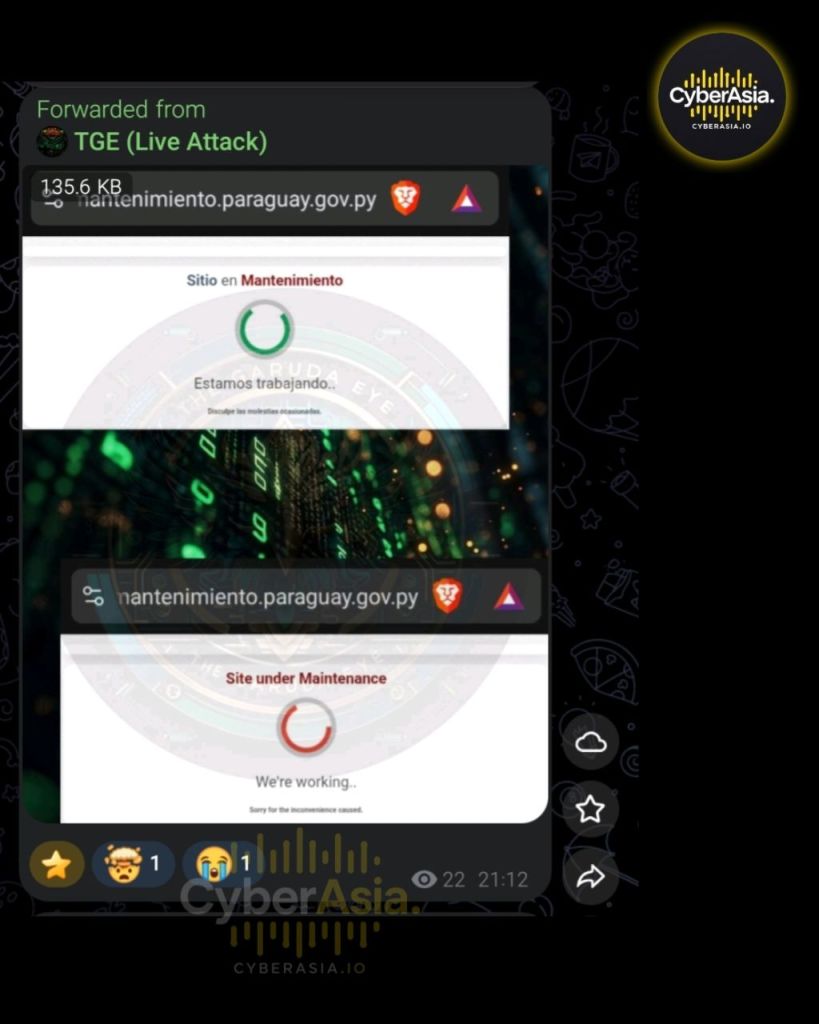
TheGarudaEye stated the outage lasted 43,200 seconds, or a full 12 hours, before administrators eventually switched the domain to a temporary maintenance page reading “Sitio en Mantenimiento” alongside its English equivalent, “Site under Maintenance.” This kind of status change typically signals that the affected agency’s technical team is working to restore service while simultaneously restricting public access to prevent further exploitation during recovery.
As supporting evidence for the claim, the group included links to reports from third-party uptime monitoring services check-host.net and check-host.cc, tools commonly used within the cybersecurity community to verify a domain’s availability status from multiple global network nodes in real time.
Who Was Affected
The primary target of the attack was the Dirección Nacional de Migraciones, the Paraguayan government agency responsible for managing migration flows, travel documents, and immigration administrative services for citizens and cross-border travelers. The site serves as the main digital gateway for the public to handle migrant pre-registration, residency applications, and immigration document status checks online.
A disruption to a service of this scale can hinder public administrative operations, particularly for citizens and businesses that rely on digital access for cross-border and residency-related matters.
Attacker Identity and Motive
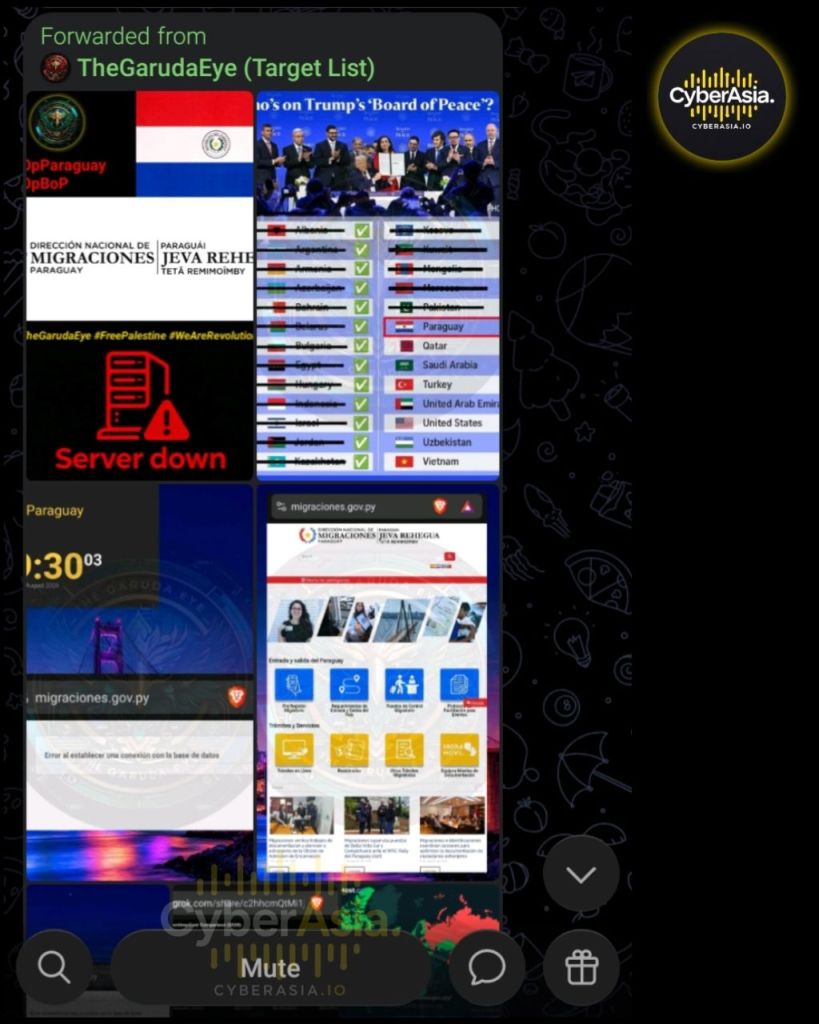
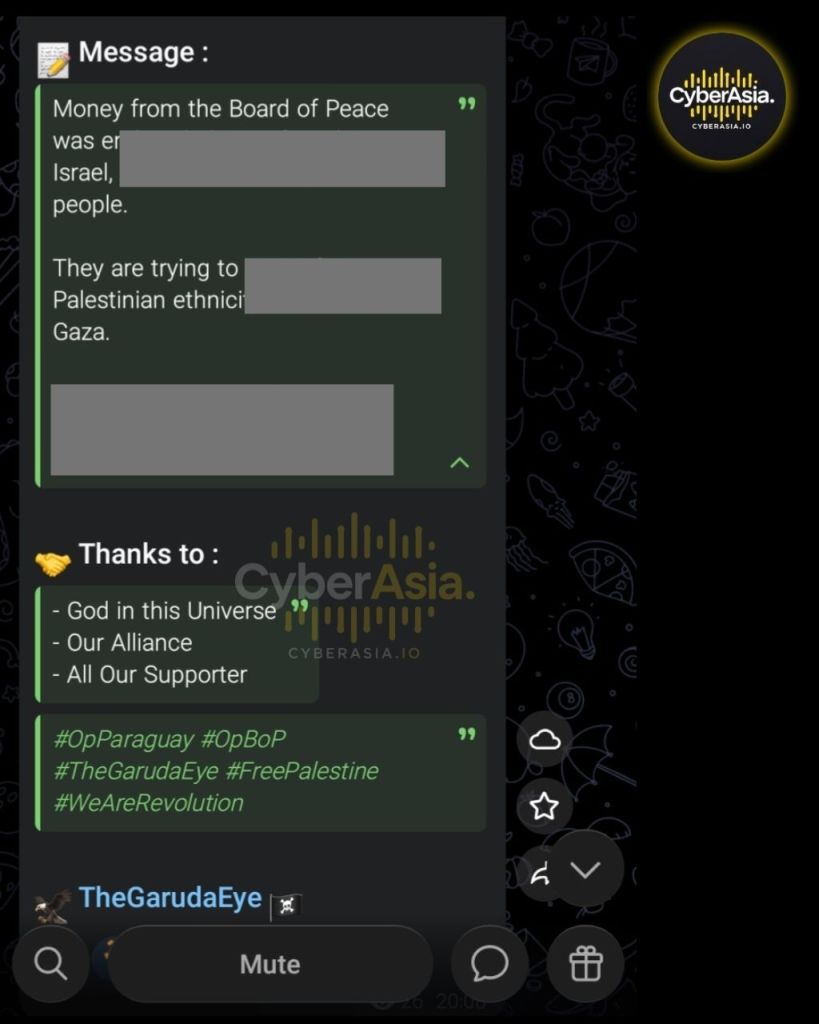
TheGarudaEye presents itself as a hacktivist group with a political orientation linking its operations to geopolitical developments in the Middle East, specifically the Israel-Palestine conflict. In an official message accompanying the attack evidence, the group alleged that funds from an international initiative called the “Board of Peace” had been misappropriated, transferred to Israel, and used in ways it described as harmful to Palestinian civilians. The group also referenced the erasure of Palestinian identity through a reconstruction project it referred to as “New Gaza.”
Paraguay was named among the countries included in that framework, according to a chart of supporting nations that TheGarudaEye circulated alongside its attack evidence as justification for the operation. Based on the hashtags used, the campaign was carried out under the labels #OpParaguay and #OpBoP, while the group’s identity was marked with #TheGarudaEye, #FreePalestine, and #WeAreRevolution.
Visual material circulated by the group also featured a green-and-gold, circuit-styled Garuda bird logo as TheGarudaEye’s identity emblem, displayed alongside Paraguay’s national flag and the logo of Senatur, the country’s tourism authority, which appeared to have been referenced in the campaign’s promotional material without being confirmed as a direct technical target.
Technical Details of the Attack
The attack pattern reflected in the published evidence is consistent with the characteristics of a Distributed Denial-of-Service (DDoS) attack, a method in which an attacker floods a target server with a massive volume of traffic requests until the system runs out of capacity to serve legitimate users. The database connection failure displayed on the migraciones.gov.py page is a common symptom of a backend server being overwhelmed by a traffic surge, causing database queries to stall or time out.
The reported 12-hour duration points to a notably persistent attack, given that most government infrastructure is typically equipped with basic mitigation mechanisms such as rate limiting or third-party DDoS protection services. Redirecting to a maintenance page is ultimately a standard step many organizations take to contain the damage while reinforcing their network defenses.
Broader Campaign Context
A global attack map shared by TheGarudaEye shows red markers spread across multiple regions, indicating that the Paraguay incident is not an isolated act but part of a wider, cross-border operation being run by the group or by hacktivist alliances aligned with it. The circulated material also included an invitation to join the group’s private community, a common pattern used by hacktivist actors to expand their support base and document further operations.
The “Global Cyber Attack #0126” report number listed in TheGarudaEye’s documentation indicates that the Paraguay incident is the 126th entry in a catalog of operations the group regularly publishes. This kind of sequential numbering is common among hacktivist groups seeking to build a narrative of campaign continuity for their support base, while reinforcing the impression that operations against government
Potential Impact
Beyond the disruption to public access, incidents like this risk eroding public trust in the reliability of government digital systems, particularly in sectors that store sensitive personal data such as immigration records. While the published material shows no indication of data exposure, an extended service outage can still disrupt time-sensitive administrative processes, such as processing travel documents or verifying residency status.
The impact extends beyond the technical layer alone. For businesses that depend on immigration status verification for cross-border labor purposes, a 12-hour continuous outage can delay processes that would normally take minutes to complete. Foreign nationals in the process of renewing residence permits or checking their residency status may also face delays, given that most of these services are now fully integrated into online systems with limited offline fallback options.
Response and Mitigation
DNM Paraguay’s technical team switched the site to maintenance mode as an emergency measure to restore service while assessing the vulnerabilities exploited during the attack. As of this writing, the Paraguayan government has not issued an official public statement regarding the incident.
As a longer-term preventive measure, government agencies managing public digital services are generally advised to strengthen DDoS mitigation capacity through content delivery networks (CDNs) and network-layer protection services, tighten real-time traffic anomaly monitoring, and develop crisis communication contingency plans to keep the public informed of alternative service channels during outages.
Conclusion
The attack on migraciones.gov.py underscores how government digital infrastructure across Latin America has become an arena for politically charged hacktivist campaigns rooted in Middle East conflict narratives. TheGarudaEye leveraged Paraguay’s alleged link to the international “Board of Peace” initiative as justification for its operation, illustrating how cross-continental political issues can translate into tangible technical consequences for a country’s public services.
CyberAsia.io will continue monitoring developments in this incident, including any official statement from Paraguayan authorities and further activity from TheGarudaEye or affiliated hacktivist networks.
> INTELLIGENCE_NOTICE
The report above detailing TheGarudaEye Takes Down Paraguay’s Immigration Server for 12 Hours is part of the CyberAsia public archive. For organizations requiring real-time Indicators of Compromise (IoCs), YARA rules, and extended mitigation strategies for ddos threats, please refer to our Secure Drop or contact the research desk.