 Data Breach & Leak
~/ › Data Breach & Leak › article
Data Breach & Leak
Data Breach: XH4X CYB3R Targets Universitas Negeri Malang in #OpIndo
> By Haider | Aug 08, 2026 | 3 min read
?? THREAT INTELLIGENCE ADVISORY:
The Indonesian education sector has suffered a massive privacy compromise. The notorious threat actor XH4X CYB3R has successfully breached and leaked a database containing the sensitive personal records of students and staff from Universitas Negeri Malang.
Operating under the banner of the #OpIndo hacktivist campaign, XH4X CYB3R targets Universitas Negeri Malang as their latest high-profile victim. The leaked files, currently circulating on dark web forums and underground Telegram channels, expose highly confidential data that puts thousands of individuals at severe risk of identity theft and targeted phishing campaigns.
What Data Was Compromised?
According to screenshots analyzed by the CyberAsia threat intelligence team, the data dump specifically points to internal records from um.ac.id (Universitas Negeri Malang). The threat actor provided direct Mediafire links containing JSON files with structured database records.
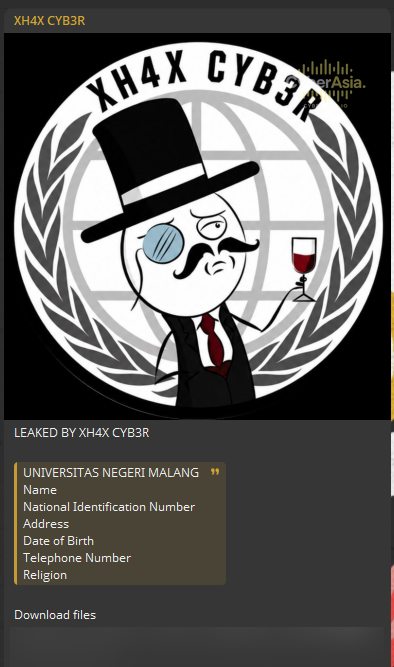
The screenshot explicitly details the compromised fields, which include highly sensitive Personally Identifiable Information (PII):
> COMPROMISED_DATA_RECORDS
- Name
- National Identification Number (NIK): The 16-digit Indonesian ID number.
- Address
- Date of Birth
- Telephone Number
- Religion
Because XH4X CYB3R targets Universitas Negeri Malang with such precision, the leak of NIKs combined with full addresses and phone numbers is particularly devastating. This combination is exactly what cybercriminals need to bypass Know Your Customer (KYC) verification for digital banking and online loan applications (Pinjol).
The Rise of #OpIndo
The #OpIndo campaign appears to be a decentralized effort by various hacktivists to expose vulnerabilities within Indonesian state, municipal, and educational infrastructure. While some groups aim for financial extortion, actors like XH4X CYB3R are leaking these databases publicly for free. This indicates a primary motivation of “clout chasing”—building a fearsome reputation within the underground community by humiliating institutional cybersecurity defenses.
Defender Takeaways: Securing Educational Data
Universities are prime targets for data breaches because they house vast amounts of PII but often operate on legacy infrastructure with decentralized security controls. To prevent similar breaches, educational IT administrators must enforce the following:
- Database Encryption: Sensitive fields like NIKs must be encrypted at rest. Plaintext JSON exports should never be accessible from web-facing applications.
- Implement WAF and API Security: Ensure that all API endpoints serving student data are protected by Web Application Firewalls (WAF) and require strict, token-based authentication (e.g., OAuth 2.0).
- Regular Penetration Testing: Actively hunt for SQL injection (SQLi) or Insecure Direct Object Reference (IDOR) vulnerabilities in student portal applications.
Students and staff affected by this breach should remain hyper-vigilant against SMS phishing (Smishing) attempts. CyberAsia will continue to monitor the fallout of the #OpIndo campaign. For the latest threat intelligence, visit our CyberAsia news hub.
> DISCLAIMER
The information provided in this article is for educational and threat intelligence purposes only. CyberAsia does not condone, promote, or encourage any illegal activities, including data breaches or unauthorized access to systems. The claims made by threat actors are reported strictly for awareness and defensive mitigation.
> subscribe_to_intel
Get CyberAsia threat intelligence updates by email. Unsubscribe anytime. Privacy Policy.
Mitigation & Prevention Strategies
Data breaches involving Personally Identifiable Information (PII) or sensitive corporate databases require immediate containment and long-term security overhauls:
- Database Hardening: Ensure databases (SQL, MongoDB, Elasticsearch) are never exposed directly to the public internet. Bind services to localhost or strict internal VPCs.
- Data Encryption: Implement robust encryption for data-at-rest. Even if threat actors exfiltrate database dumps, properly salted and hashed passwords minimize the blast radius.
- Credential Rotation: Following any suspected breach, force a global password reset for affected users and rotate API keys and service credentials immediately.
Disclaimer: CyberAsia is an independent Cyber Threat Intelligence (CTI) research organization. The information provided in this report is derived from public intelligence gathering, dark web monitoring, and threat actor claims. It is published strictly for educational purposes, defensive analysis, and public awareness. CyberAsia does not endorse, verify, or facilitate any cyberattacks or illegal activities.
> INTELLIGENCE_NOTICE
The report above detailing Data Breach: XH4X CYB3R Targets Universitas Negeri Malang in #OpIndo is part of the CyberAsia public archive. For organizations requiring real-time Indicators of Compromise (IoCs), YARA rules, and extended mitigation strategies for data breach & leak threats, please refer to our Secure Drop or contact the research desk.

> ABOUT_AUTHOR: Haider
> related_intel --suggest
Data Breach & Leak
 Data Breach & Leak
Data Breach: Cyber Team Indonesia Leaks Pemdes Butuh Citizen Records
> read Data Breach & Leak