 SCADA & IoT
~/ › SCADA & IoT › article
SCADA & IoT
NoName057(16) CCTV Hack: 7 Critical Facts on Muebles Tuco Breach
> By Haider | Aug 04, 2026 | 5 min read
The NoName057(16) CCTV hack is a highly critical threat that has successfully compromised the video surveillance infrastructure of Muebles Tuco, a prominent Spanish furniture retail chain operating under the Rey Corporación group. Specifically, the threat actors gained unauthorized access to the security cameras at the Tuco Alcorcón branch located in Parque Oeste, Madrid.
Our threat intelligence team has identified this physical security breach as a major escalation by the notorious pro-Russian hacktivist group. This incident highlights the ongoing vulnerabilities in enterprise physical security systems. It also signals an increasing trend of hacktivists targeting Internet of Things (IoT) devices to demonstrate their reach and capability.
Table of Contents
- Geopolitical Context and Actor Motivation
- Technical Analysis: Tactics and Procedures
- The Impact on Retail Security
- 7 Critical Mitigation Recommendations
Geopolitical Context of the NoName057(16) CCTV Hack
NoName057(16) is a well-known hacktivist collective that primarily targets countries supporting Ukraine. Spain has been a frequent target under their ongoing #OpSpain campaigns due to its geopolitical alignments and military support.
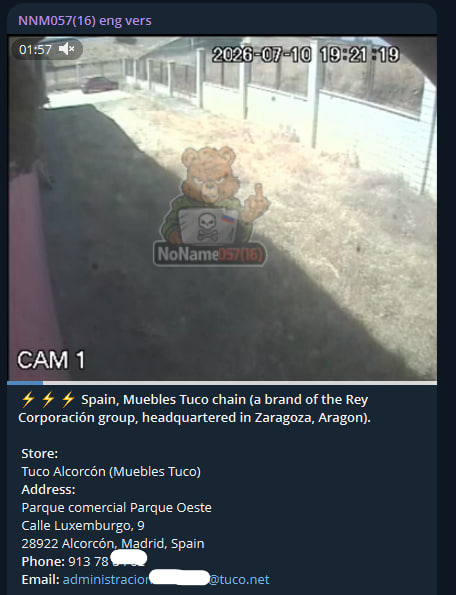
Figure 1: Leaked surveillance feed from Muebles Tuco published by the attackers.
By executing the NoName057(16) CCTV hack against a commercial entity like Muebles Tuco, the group aims to sow discord. They want to embarrass local businesses and project an image of pervasive surveillance capability across Europe.
In their official Telegram announcement, the group mocked the store’s security posture. They stated they had “watched quietly for several days” observing warehouses, parking lots, and offices.
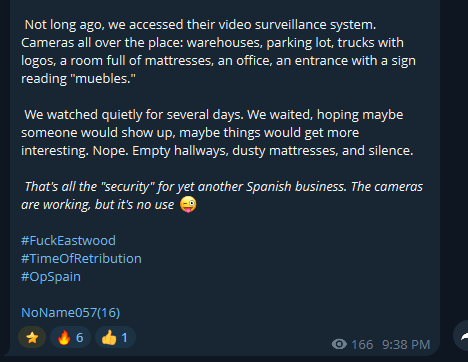
Figure 2: Official Telegram announcement detailing the Muebles Tuco breach.
The use of hashtags such as #TimeOfRetribution and #OpSpain confirms the ideological motivation behind the breach. They intentionally target Spanish businesses to protest against the national government’s foreign policies.
Technical Analysis: Tactics and Procedures
While this threat group is predominantly known for orchestrating massive volumetric DDoS attacks via their custom toolkit, the NoName057(16) CCTV hack demonstrates a dangerous pivot. It shows their opportunistic willingness to exploit poorly secured IoT devices.
The observed Tactics, Techniques, and Procedures (TTPs) for this attack likely include the following vectors:
1. Exploitation of Exposed Services: Threat actors continuously scan the IPv4 space. They use tools like Shodan or Masscan to identify internet-facing cameras or Network Video Recorders (NVRs) with open management ports (e.g., RTSP, HTTP/S).
2. Credential Stuffing and Default Passwords: Brute-forcing access using default manufacturer credentials remains a common and critical vulnerability. Many administrators fail to change these passwords upon initial installation.
3. Vulnerability Exploitation: Exploiting unpatched Common Vulnerabilities and Exposures (CVEs) in legacy firmware. Once inside, attackers can stream live footage without alerting local security teams.
The Impact on Retail Security
The successful execution of the NoName057(16) CCTV hack at the Tuco Alcorcón branch is a major wake-up call for the retail industry. When physical surveillance systems are compromised, it poses a severe risk.
It threatens not only data privacy but also the physical safety of corporate assets and personnel. Attackers can map out security patrol routes. They can monitor the movement of high-value inventory and identify physical blind spots.
Furthermore, compromised IoT devices are frequently conscripted into botnets. These botnets can then be utilized to launch further attacks against other geopolitical targets, effectively weaponizing a company’s own infrastructure.
7 Critical Mitigation Recommendations
The compromise of physical security systems requires immediate remediation. Organizations must urgently review their IoT security postures to prevent another NoName057(16) CCTV hack on their premises.
We strongly recommend the following 7 defensive measures aligned with global cybersecurity best practices (CISA):
- Isolate IoT Networks: Segment video surveillance systems from the primary corporate network using VLANs. Ensure they are not directly accessible from the public internet.
- Implement VPNs: Require secure, authenticated VPN connections to view camera feeds remotely.
- Enforce Zero Trust: Use Zero Trust Network Access (ZTNA) policies for all external and internal connections to IoT hardware.
- Change Default Passwords: Immediately change all default credentials on IP cameras and NVRs before deployment.
- Enable MFA: Enforce multi-factor authentication (MFA) wherever the hardware supports it.
- Patch Management: Regularly update the firmware of all surveillance hardware to patch known vulnerabilities.
- Replace EOL Hardware: Quickly replace end-of-life (EOL) hardware that no longer receives security updates from the manufacturer.
As the cyber warfare landscape evolves, the barrier between digital and physical security continues to blur. This devastating breach proves that hacktivists will exploit any weak link in an organization’s perimeter.
Whether it is a misconfigured web server or an unsecured warehouse camera, every endpoint matters. By implementing robust network segmentation and strict access controls, enterprises can significantly reduce their attack surface and protect their critical assets.
For more information on mitigating massive cyber threats, read our in-depth analysis on recent high-profile cyber attacks.
Mitigation & Prevention Strategies
Exploitation of vulnerabilities in critical infrastructure and edge devices requires immediate remediation to prevent catastrophic disruption:
- Patch Management: Apply vendor-supplied security patches or firmware updates immediately. For legacy systems, deploy virtual patching via network firewalls.
- Isolate OT Networks: SCADA and OT environments must be strictly isolated from corporate IT networks (the Purdue Model) to prevent spillover attacks.
- Continuous Monitoring: Deploy Endpoint Detection and Response (EDR) solutions and monitor network traffic for indicators of compromise (IoCs) associated with known exploits.
Disclaimer: CyberAsia is an independent Cyber Threat Intelligence (CTI) research organization. The information provided in this report is derived from public intelligence gathering, dark web monitoring, and threat actor claims. It is published strictly for educational purposes, defensive analysis, and public awareness. CyberAsia does not endorse, verify, or facilitate any cyberattacks or illegal activities.
> INTELLIGENCE_NOTICE
The report above detailing NoName057(16) CCTV Hack: 7 Critical Facts on Muebles Tuco Breach is part of the CyberAsia public archive. For organizations requiring real-time Indicators of Compromise (IoCs), YARA rules, and extended mitigation strategies for scada & iot threats, please refer to our Secure Drop or contact the research desk.

> ABOUT_AUTHOR: Haider
> related_intel --suggest
SCADA & IoT
 SCADA & IoT
BMS Cyberattack: Disrupt0r Hacks Quinquela Plaza SCADA
> read SCADA & IoT