 ddos
ddos
ddos
MegaMedusa & #OpZionistV2: Has RipperSec Returned?
> By Clara | Aug 10, 2026 | 4 min read
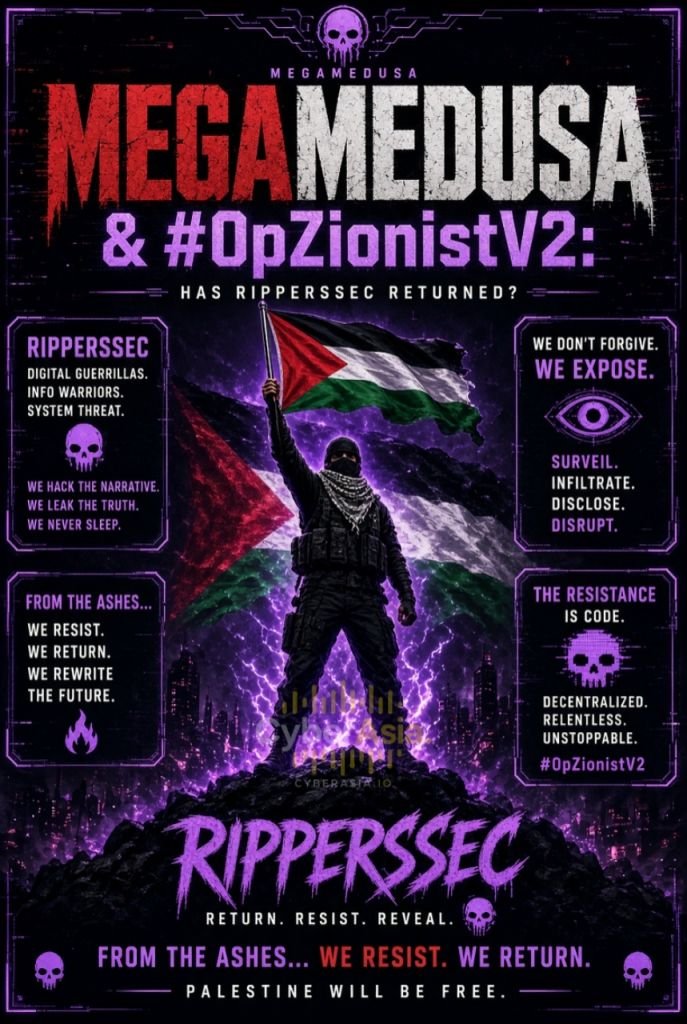
The website of tour operator “Authentic Israel” went dark for several hours after being named a target in the #OpZionistV2 campaign, said to have been carried out with an attack script called MegaMedusa. The activity was announced through the Telegram channel @RipperSecDirect , raising the question behind this report’s headline: has the hacktivist group RipperSec actually returned?
What Happened
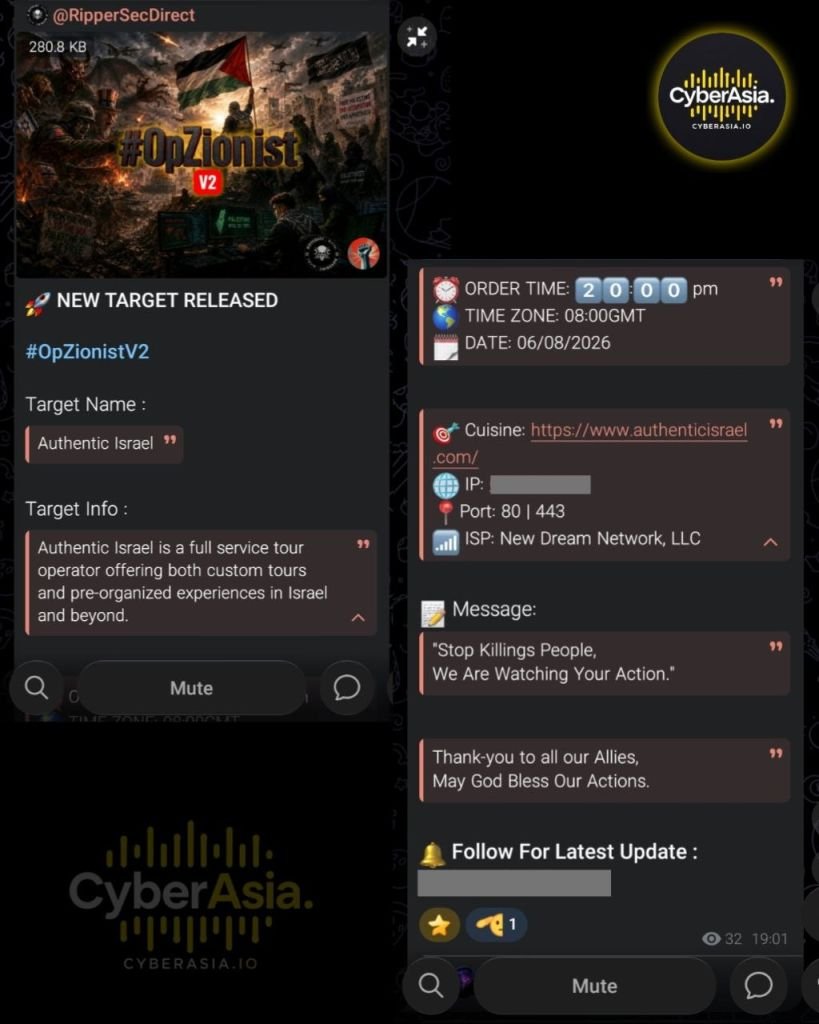
On August 6, 2026, the Telegram channel @RipperSecDirect announced a new target in the #OpZionistV2 campaign, naming Authentic Israel , a tour operator offering custom travel packages in Israel and beyond , as the target. The announcement included the attack’s scheduled execution time, the target’s website address, and a politically charged message framing the action as a response to the situation in Gaza.
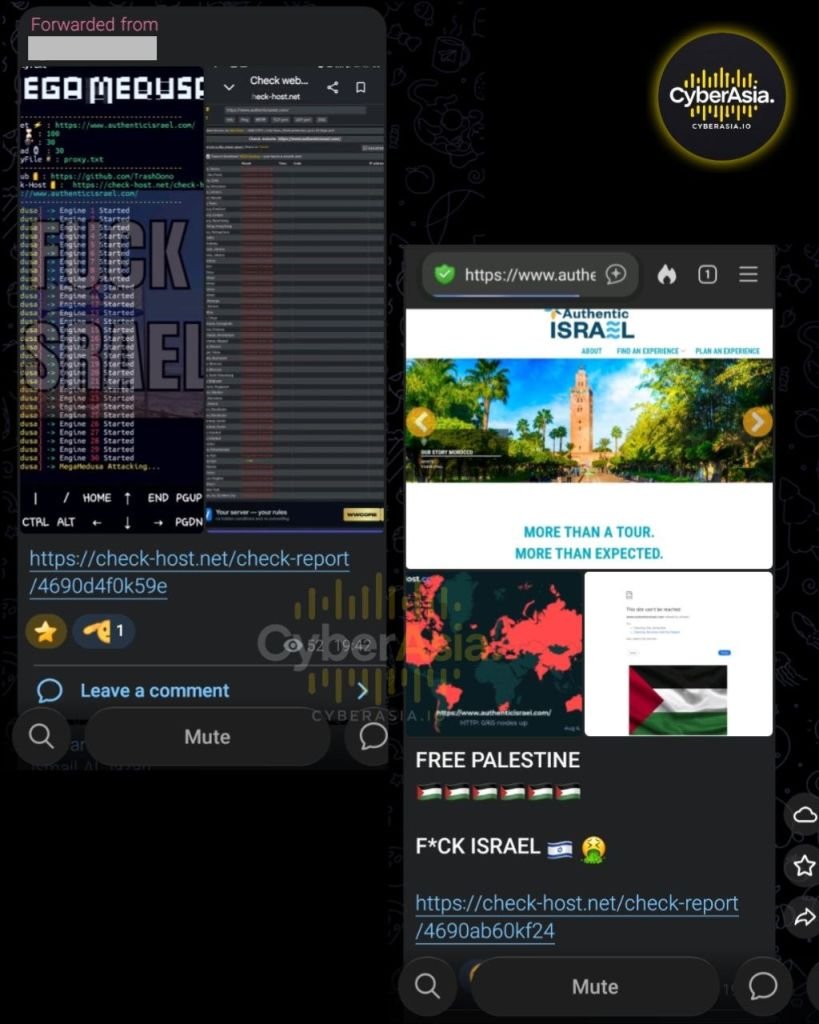
Shortly after, the same channel shared a screenshot of a script called MegaMedusa spinning up dozens of attack “engines” in sequence, accompanied by a caption describing the tool as actively “attacking” the target domain.
Who Was Affected
The directly affected party is Authentic Israel, a private company in the tourism sector , not a government entity or piece of critical infrastructure. Based on the messaging shared by the actors involved, the motive appears political, and the target was the availability of the company’s website rather than user data.
Technical Details
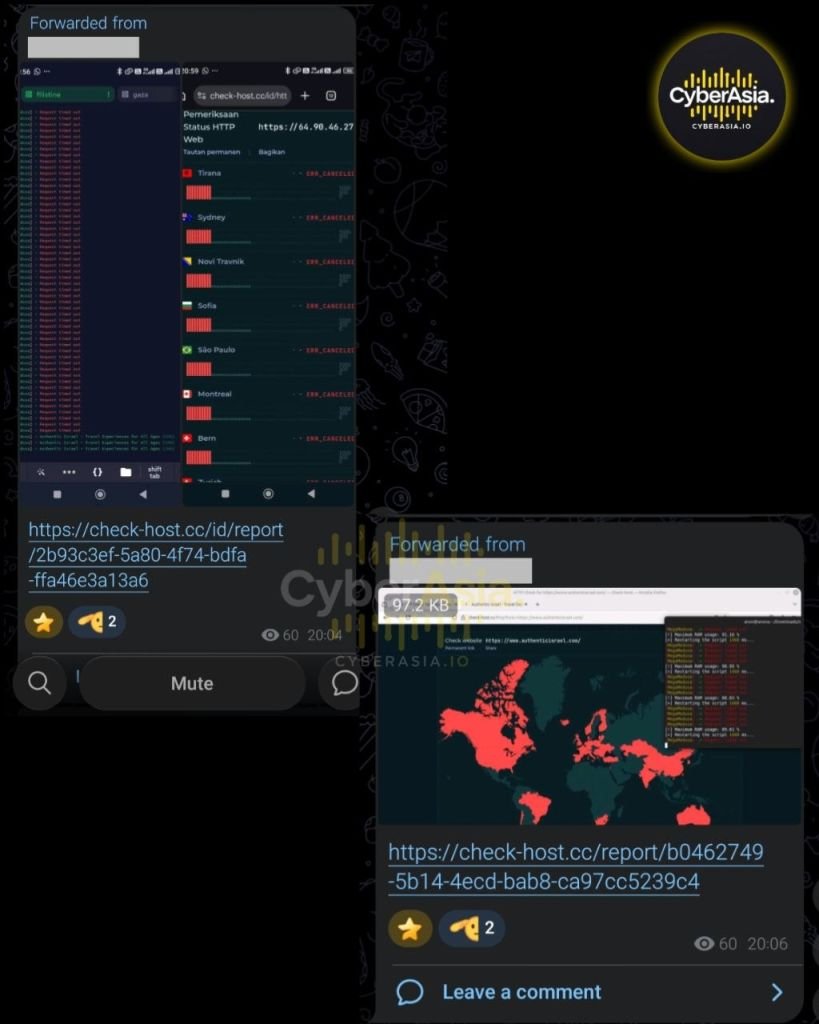
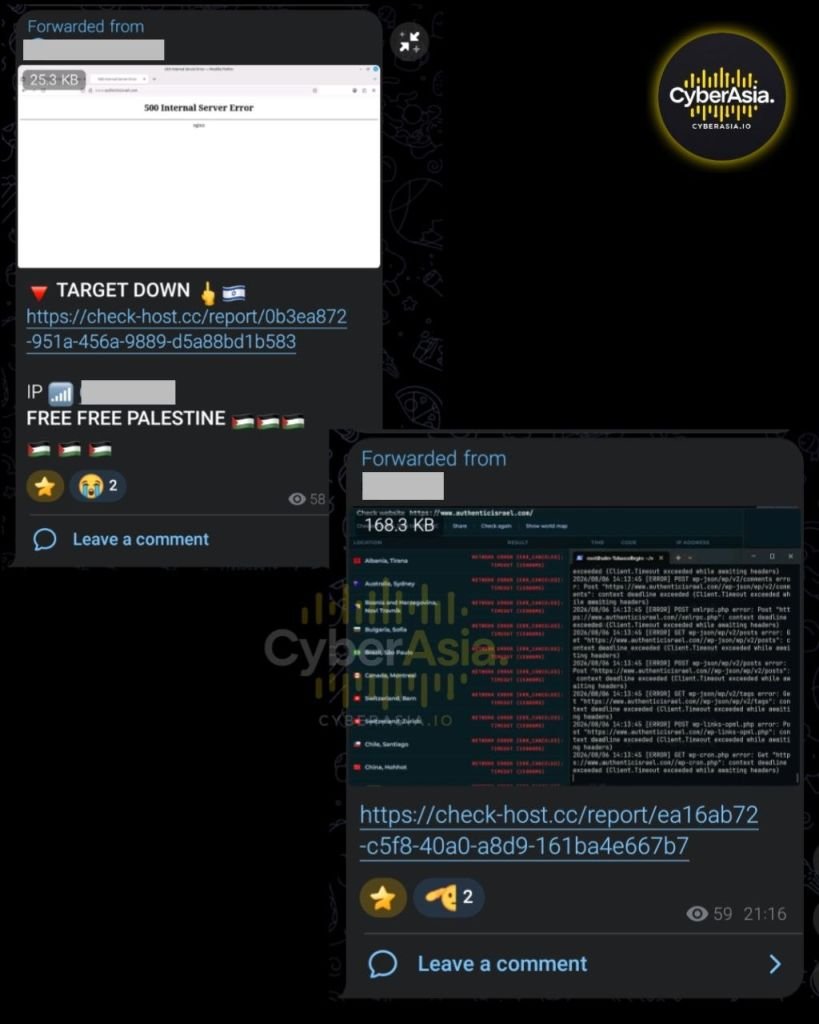
As evidence of impact, several report links from third-party monitoring services check-host.net and check-host.cc were shared. These reports showed HTTP requests from monitoring nodes across multiple countries , including Albania, Australia, Bosnia and Herzegovina, Bulgaria, Brazil, Canada, Switzerland, Chile, and China , all returning TIMEOUT or ERR_CANCELED statuses, indicating the site was unreachable from those locations at the time of testing.
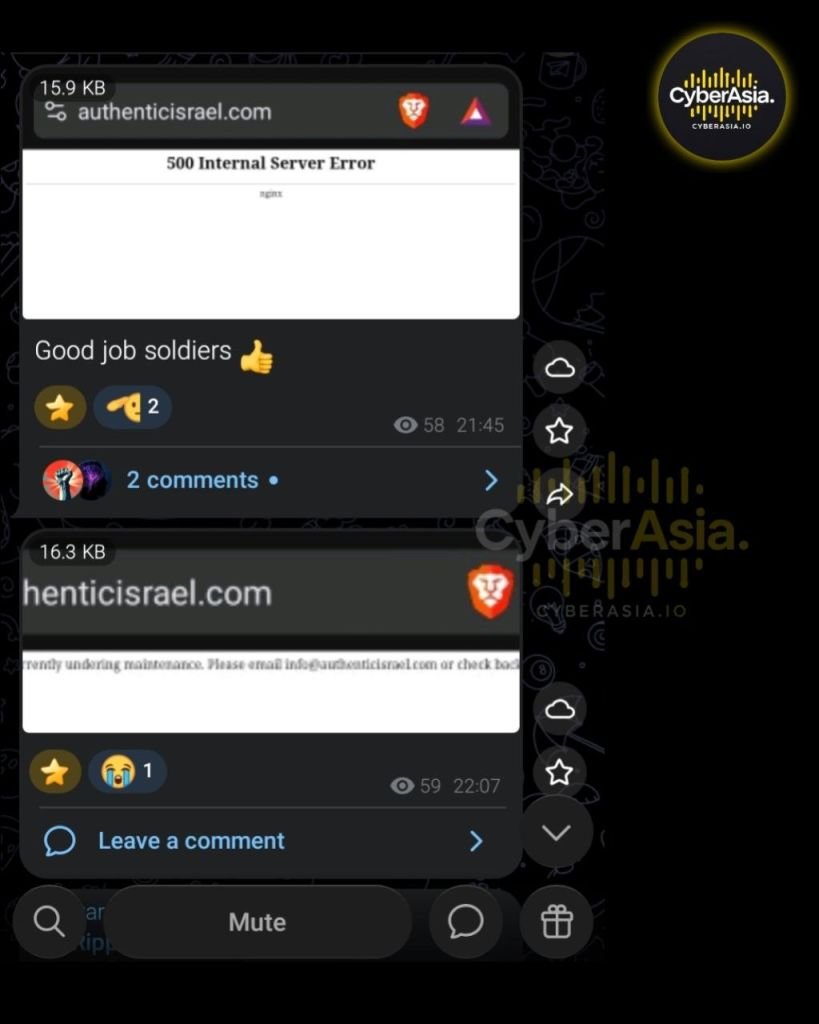
Additional screenshots showed application-level error logs, with several WordPress endpoints , including wp-json/wp/v2/posts, wp-json/wp/v2/comments, xmlrpc.php, wp-links-opml.php, and wp-cron.php , hitting context deadline exceeded errors while awaiting response headers. This is consistent with a WordPress-based site being overwhelmed by a surge in requests.The site subsequently returned a 500 Internal Server Error served by nginx, before eventually displaying a maintenance notice: “currently undergoing maintenance. Please email [email protected]…”
Threat Actor Background
The channel name @RipperSecDirect points to RipperSec, a hacktivist group previously known for pro-Palestinian themed campaigns across Southeast Asia. This report’s headline is deliberately framed as a question , “Has RipperSec Returned?” , because a channel name alone is not strong evidence of direct involvement by RipperSec’s core group. The #OpZionistV2 campaign appears to be a continuation of the earlier #OpZionist operation, following a similar playbook: target announcements on Telegram, DDoS execution using off-the-shelf tooling, and rapid publication of “proof of impact” via failed uptime reports.Whether the “MegaMedusa” tool named in the screenshots is a genuinely new DDoS script or a modified version of existing DDoS-for-hire tooling circulating among similar hacktivist groups has not been confirmed.
Potential Impact
For Authentic Israel, the primary impact is operational and reputational disruption while the site remained inaccessible to prospective customers. Nothing in the material that circulated suggests customer data, payment systems, or backend infrastructure was compromised , the attack pattern observed appears to be purely volumetric/availability-focused rather than a data intrusion. More broadly, this incident adds to a growing list of small and mid-sized businesses in the tourism and private sector being targeted by geopolitically motivated hacktivist campaigns, a recurring trend since the escalation of conflict in the Middle East in recent years.
Response and Mitigation
Based on circulating screenshots, Authentic Israel appears to have switched its site into maintenance mode while providing an alternate contact email , a common step site operators take to absorb excess traffic while restoring service. CyberAsia.io has not received official confirmation from Authentic Israel regarding this incident.
Conclusion
Reports of a DDoS attack on Authentic Israel under the #OpZionistV2 banner follow a familiar hacktivist playbook: symbolically chosen targets, rapid publication of “victory” evidence on Telegram, and attribution to a recognizable name like RipperSec used to amplify publicity. Until further independent verification emerges, whether RipperSec has genuinely returned as an active group remains unconfirmed. CyberAsia.io will update this report as new information becomes available.
> DISCLAIMER
The information provided in this article is for educational and threat intelligence purposes only. CyberAsia does not condone, promote, or encourage any illegal activities, including data breaches or unauthorized access to systems. The claims made by threat actors are unverified and reported strictly for awareness and defensive mitigation.
> subscribe_to_intel
Join 5,000+ analysts. Get uncensored threat intelligence and breach alerts delivered directly to your inbox. Privacy Policy.
Mitigation & Prevention Strategies
To defend against advanced Layer 7 and volumetric DDoS attacks observed in these campaigns, organizations should implement the following defensive postures:
- Edge Protection: Deploy robust Web Application Firewalls (WAF) and Anti-DDoS solutions configured to challenge anomalous request rates (e.g., CAPTCHA or JS challenges) before they hit origin servers.
- Geographic Rate Limiting: If the threat actor originates from or utilizes botnets concentrated in specific regions, enforce geo-blocking rules for non-essential traffic.
- Infrastructure Scaling: Ensure load balancers and auto-scaling groups are optimized to absorb sudden traffic spikes while maintaining core service availability.
Disclaimer: The information presented in this threat intelligence report is for educational and cybersecurity research purposes only. CyberAsia reports on cyber incidents to help organizations understand and defend against emerging threats. We do not provide hacking instructions, host stolen data, or endorse illegal activities.
> INTELLIGENCE_NOTICE
The report above detailing MegaMedusa & #OpZionistV2: Has RipperSec Returned? is part of the CyberAsia public archive. For organizations requiring real-time attack telemetry, check-host latency records, and edge firewall mitigation strategies for ddos incidents, please refer to our Secure Drop or contact the research desk.