 ddos
ddos
ddos
RipperSec Escalates #OpZionistV2, Targets Israel-U.S. Bird Foundation
> By Clara | Aug 12, 2026 | 4 min read
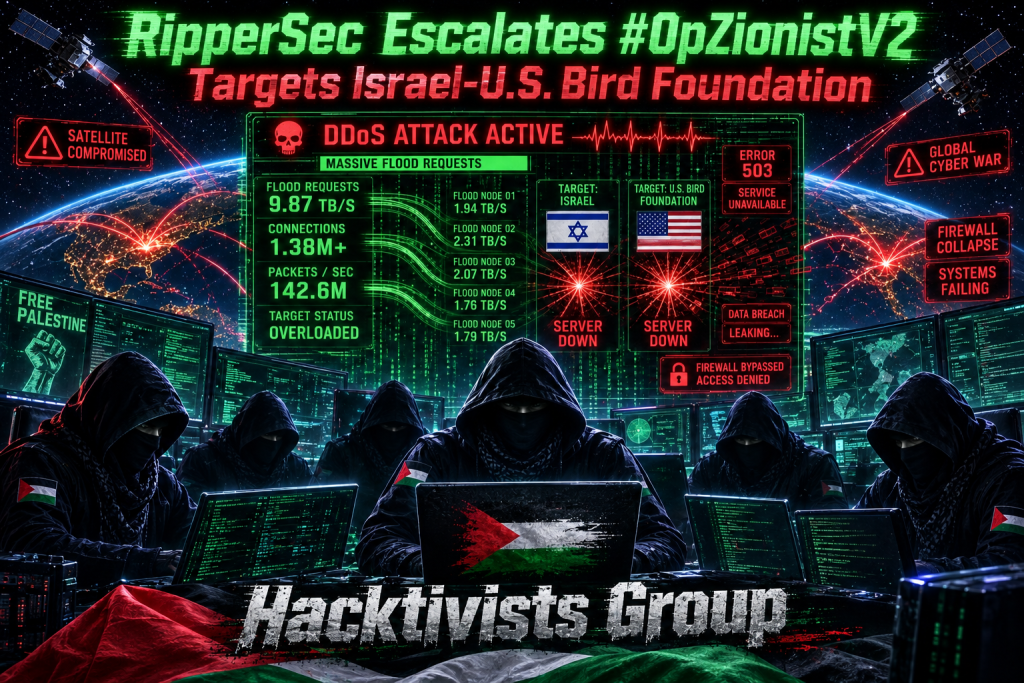
RipperSec, a hacktivist collective active on Telegram has widened its long-running #OpZionistV2 operation to include a new target: the Bird Foundation, an Israel-U.S. binational industrial research and development organization operating at birdf.com
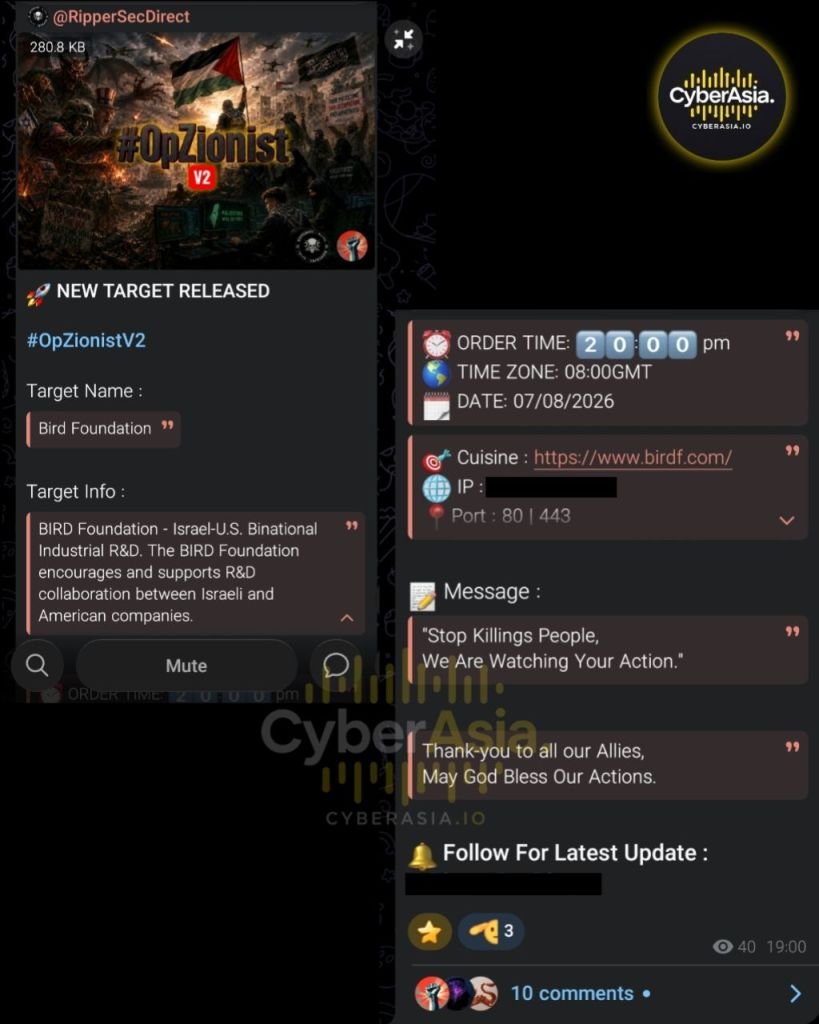
What Happened
On August 7, 2026, RipperSec’s channel posted a target announcement naming the Bird Foundation, describing it as an entity that supports research and development partnerships between Israeli and American companies. The post listed an operation window of 20:00 (GMT+8) alongside the target domain, IP address, and ports 80 and 443, accompanied by a message directed at the organization: “Stop Killings People, We Are Watching Your Action.”
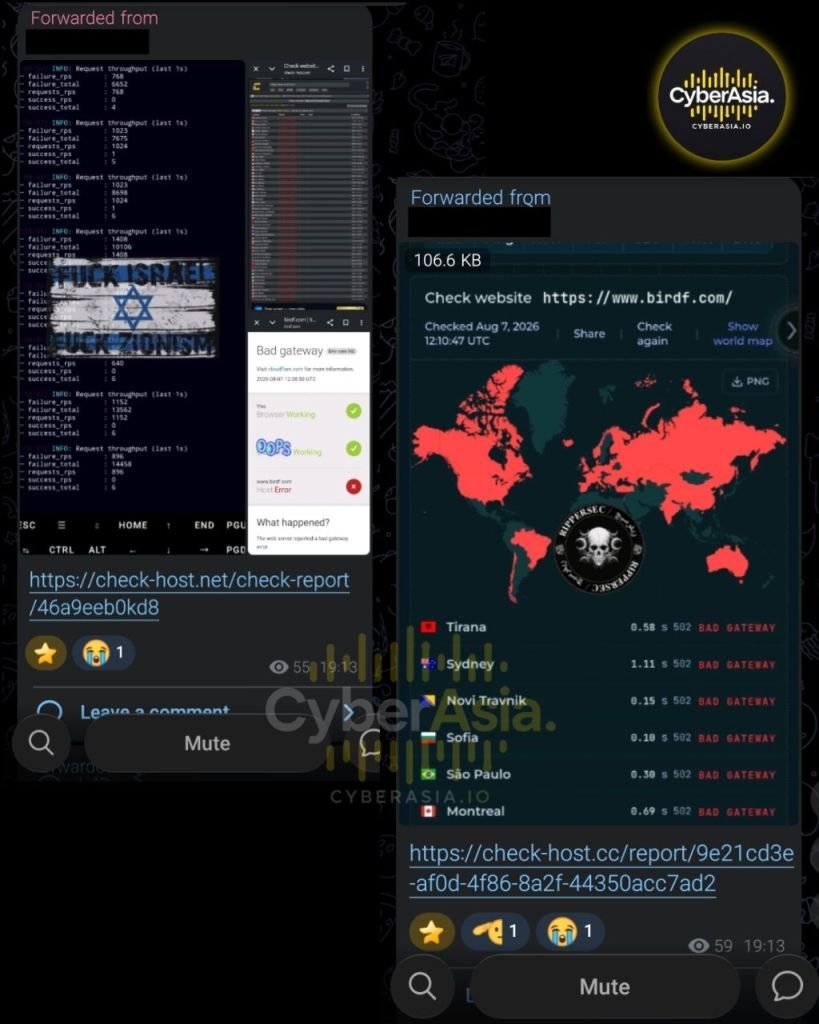
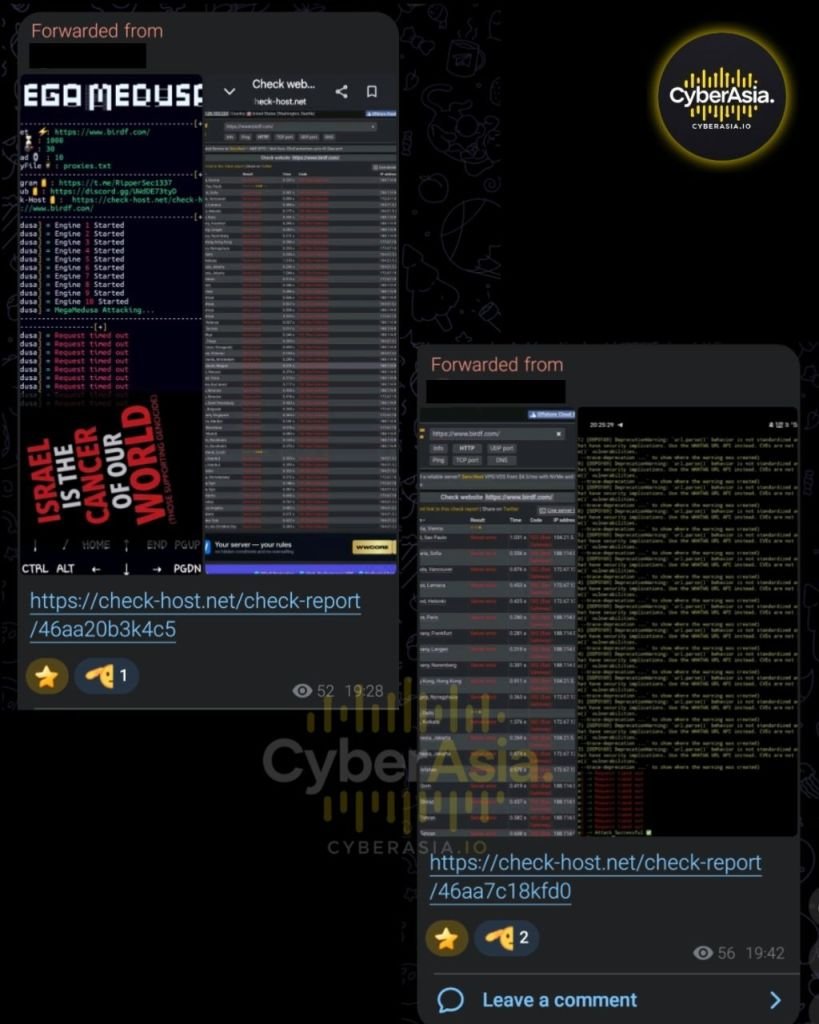
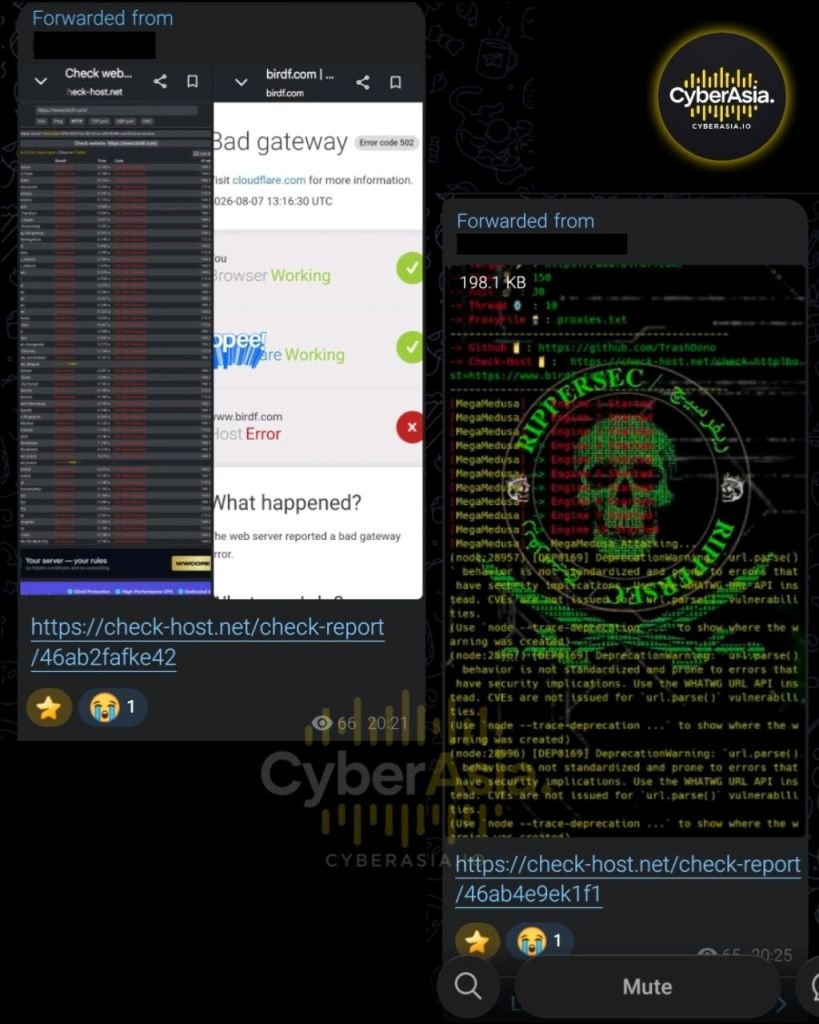
In the hours that followed, multiple check-host.net reports were circulated showing the Bird Foundation’s website returning repeated 502 Bad Gateway errors across a wide spread of global check locations, including Tirana, Sydney, Sofia, São Paulo, Montreal, Hong Kong, Jakarta, and Tehran. Screenshots shared alongside these reports also displayed terminal output from DDoS tooling , including a script identified as “MegaMedusa v3” and another labeled “Anvil” , showing engine threads initiating and requests against the birdf.com domain.
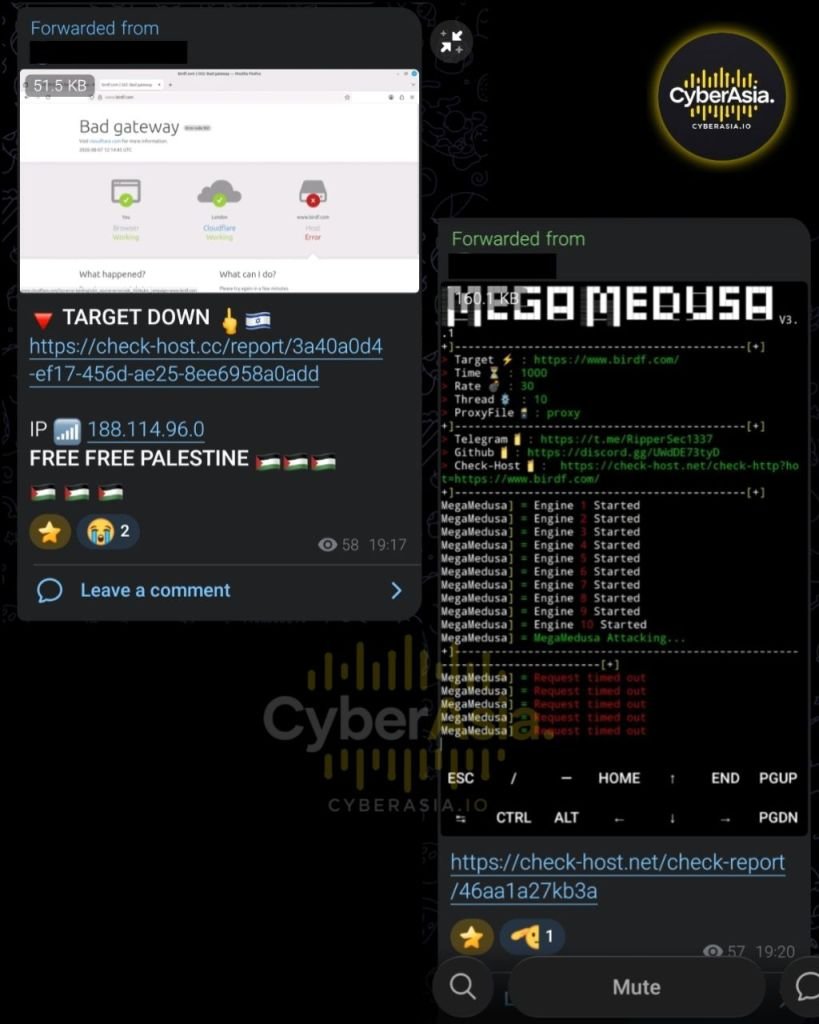
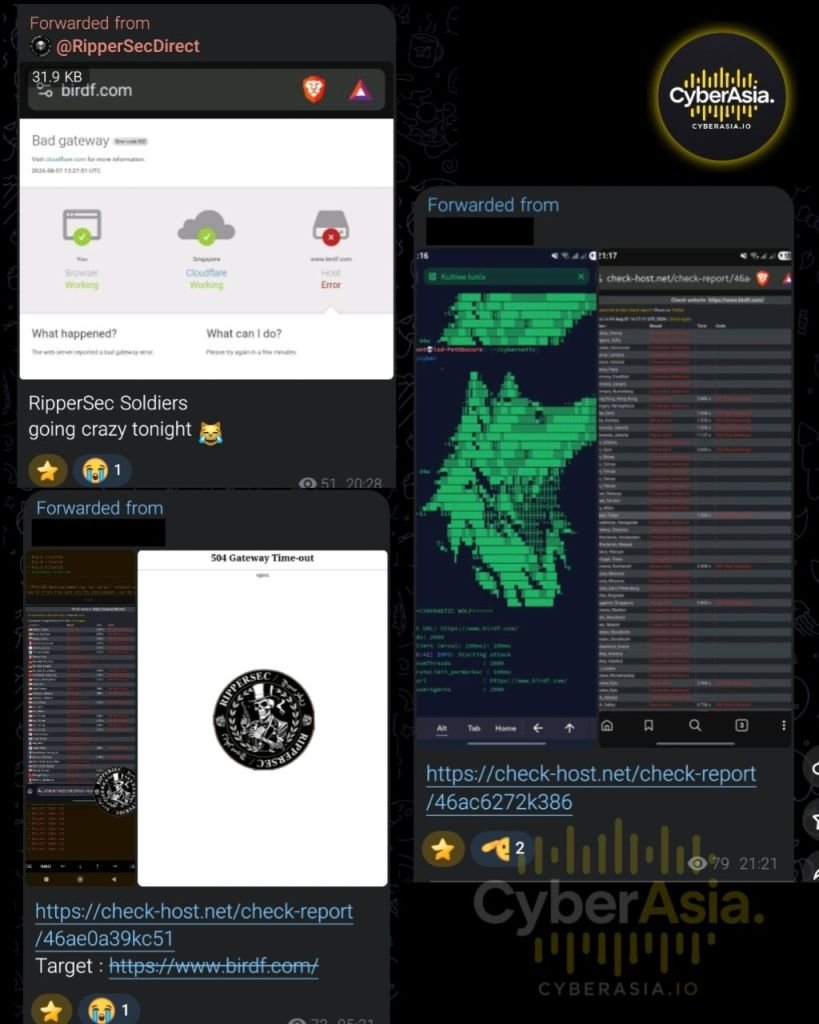
Subsequent posts through the evening, timestamped between roughly 19:00 and 21:21 local time, continued to show the site alternating between Cloudflare-protected “Working” status and Host “Error” states, with several accompanying check-host links documenting the pattern over an extended period.
Who Is Affected
The named target, the Bird Foundation, facilitates joint industrial R&D initiatives between companies in Israel and the United States. No data exposure or breach of internal systems has been referenced in the materials shared by the group; the activity described centers on availability disruption to the organization’s public-facing website.
Technical Details
The tooling referenced in the shared screenshots includes:
MegaMedusa v3 , a multi-threaded HTTP flooding script configured with a request rate and thread count directed at the target URL, alongside references to a Telegram channel and GitHub-hosted proxy list.
Anvil , a load-testing/flooding tool whose output displayed total request counts, success/failure rates, and average latency figures against the same domain.
Additional screenshots referenced a script styled “Cybernetic Wolf,” showing thread and rate-limit configuration parameters aimed at birdf.com.
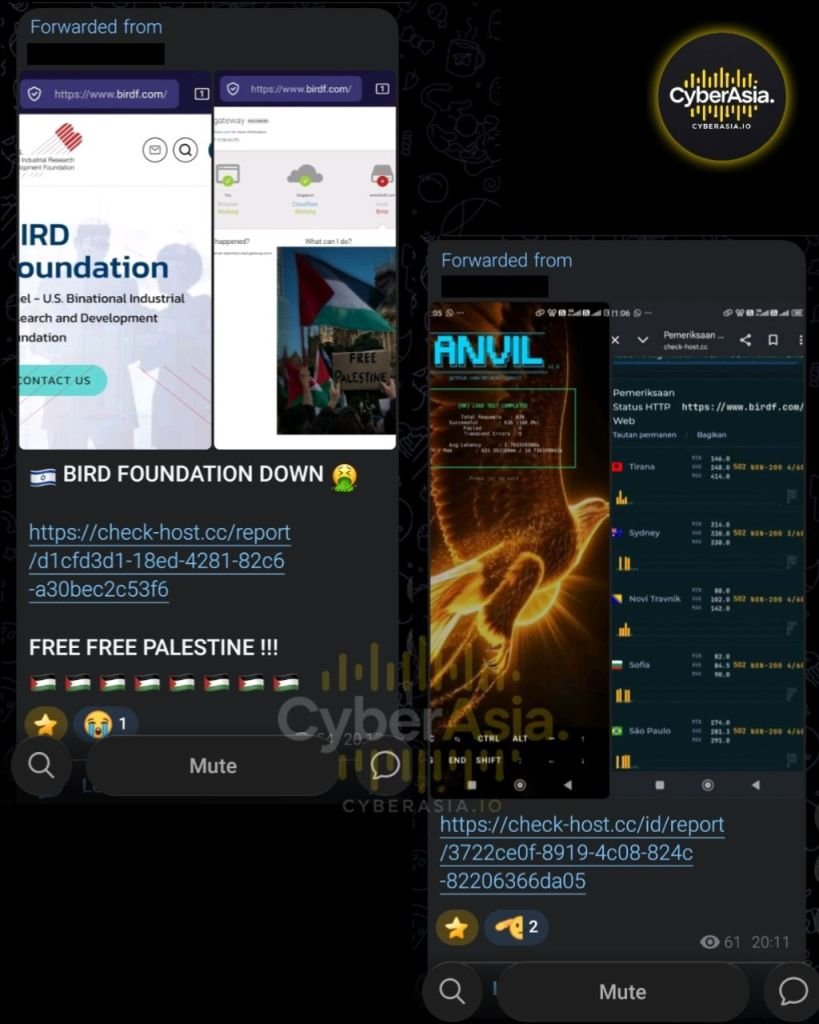
Check-host.net reports , a legitimate third-party website monitoring service , were used throughout to document the target’s HTTP response status from dozens of international vantage points, consistently showing “Bad Gateway” or connection-timeout results during the periods documented.
Threat Actor Background
RipperSec is a Pro-Palestinian hacktivist collective that has been active since 2023, and 2026 running the #OpZionistV2 campaign, a self-described series of coordinated actions against organizations it associates with Israel. The group operates a public Telegram channel and has previously been linked to other entities in the broader “Comrade’s Group” hacktivist network active across the region. The group’s messaging consistently frames its activity as a response to the conflict in Gaza, pairing technical outputs with pro-Palestinian statements and imagery.
Potential Impact
Sustained request flooding of the kind documented in these reports can degrade or interrupt access to a targeted website for legitimate visitors for as long as the activity continues, though it does not, on its own, indicate compromise of backend systems or data. The extended timeline of check-host reports , spanning several hours across multiple posts , suggests a persistent rather than single-burst effort against the domain.
Current Response
As of publication, there is no public statement from the Bird Foundation addressing the activity or confirming remediation steps. The site’s intermittent 502 errors, visible in the shared monitoring reports, are consistent with load-based disruption typically associated with DDoS traffic, though official confirmation from the organization or a neutral incident-response source had not been issued at the time of writing.
Conclusion
The addition of the Bird Foundation to RipperSec’s #OpZionistV2 target list marks a continuation of the group’s pattern of naming Israel-linked organizations and documenting resulting outages through third-party monitoring tools.
CyberAsia.io will continue tracking developments in this campaign as further targets or statements emerge.
> DISCLAIMER
The information provided in this article is for educational and threat intelligence purposes only. CyberAsia does not condone, promote, or encourage any illegal activities, including data breaches or unauthorized access to systems. The claims made by threat actors are unverified and reported strictly for awareness and defensive mitigation.
> subscribe_to_intel
Join 5,000+ analysts. Get uncensored threat intelligence and breach alerts delivered directly to your inbox. Privacy Policy.
Mitigation & Prevention Strategies
To defend against advanced Layer 7 and volumetric DDoS attacks observed in these campaigns, organizations should implement the following defensive postures:
- Edge Protection: Deploy robust Web Application Firewalls (WAF) and Anti-DDoS solutions configured to challenge anomalous request rates (e.g., CAPTCHA or JS challenges) before they hit origin servers.
- Geographic Rate Limiting: If the threat actor originates from or utilizes botnets concentrated in specific regions, enforce geo-blocking rules for non-essential traffic.
- Infrastructure Scaling: Ensure load balancers and auto-scaling groups are optimized to absorb sudden traffic spikes while maintaining core service availability.
Disclaimer: The information presented in this threat intelligence report is for educational and cybersecurity research purposes only. CyberAsia reports on cyber incidents to help organizations understand and defend against emerging threats. We do not provide hacking instructions, host stolen data, or endorse illegal activities.
> INTELLIGENCE_NOTICE
The report above detailing RipperSec Escalates #OpZionistV2, Targets Israel-U.S. Bird Foundation is part of the CyberAsia public archive. For organizations requiring real-time attack telemetry, check-host latency records, and edge firewall mitigation strategies for ddos incidents, please refer to our Secure Drop or contact the research desk.