 data leak
data leak
Indonesian Group XH4X CYB3R Declares War on India: Massive Data Leak and DDoS Assault
> By Haider | Aug 23, 2026 | 4 min read
ACTIVE_CYBER_OFFENSIVE // SEVERITY: HIGH
ORIGIN: INDONESIA (XH4X CYB3R)
In an escalating cross-border cyber clash, Indonesian Group XH4X CYB3R Declares War on India, releasing compromised student databases from prominent higher education institutions and executing disruptive denial-of-service strikes against federal government research portals. The group published raw evidence across its Telegram broadcast channel, claiming responsibility for exfiltrating sensitive personal identifiable information (PII) of thousands of Indian students and faculty members.

> TABLE_OF_CONTENTS [toggle]
- > Target Profile: Higher Education Databases Compromised
- > Forensic Analysis of Leaked Citizen and Student PII
- > Federal Portal Disruption: CCRAS Outage
- > Threat Actor Attribution: The Rise of XH4X CYB3R
- > Mitigation Recommendations
- - For Academic Institutions and Government Web Administrators:
- - For Affected Students, Faculty, and Internet Users:
Target Profile: Higher Education Databases Compromised
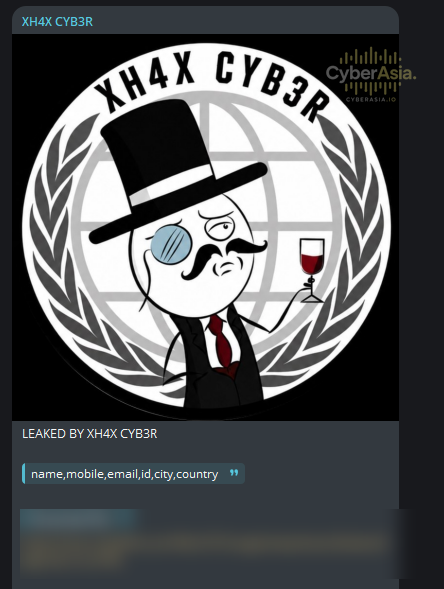
The offensive directly compromised academic management portals and student information systems across multiple states in India. Analysis of the published evidence files reveals structured database dumps affecting major educational establishments, as cataloged in our CyberAsia Threat Actors Directory:
> TARGETED_SECTOR_BREAKDOWN // CONFIRMED_IMPACT
🎓 KHALSA COLLEGE AMRITSAR (PUNJAB)
DATABASE LEAKED
DATABASE LEAKED
• Endpoint:
• Compromised Data: Name, Mobile, Email, Student ID, City, Country
• Status: Student records exfiltrated and published via public file shares.
khalsacollege.edu.in• Compromised Data: Name, Mobile, Email, Student ID, City, Country
• Status: Student records exfiltrated and published via public file shares.
🏛️ UKF COLLEGE OF ENGINEERING & TECHNOLOGY (KERALA)
DATA DUMPED
DATA DUMPED
• Endpoint:
• Exfiltrated Asset: Academic management directories and institutional records.
• Format: Structured CSV export released on Telegram.
ukfcet.ac.in• Exfiltrated Asset: Academic management directories and institutional records.
• Format: Structured CSV export released on Telegram.
⚡ CENTRAL COUNCIL FOR RESEARCH IN AYURVEDIC SCIENCES (CCRAS)
SERVICE OFFLINE
SERVICE OFFLINE
• Endpoint:
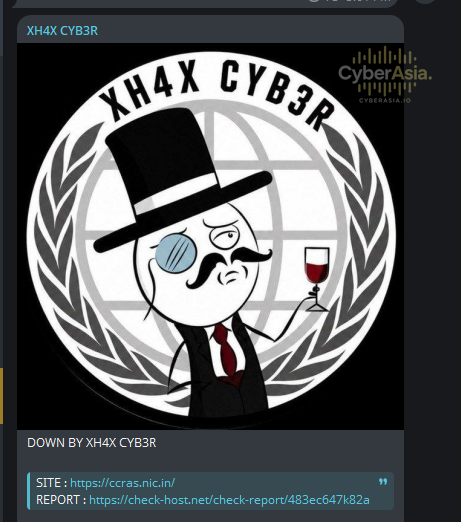
• Attack Vector: Distributed Layer 7 HTTP application-layer flood.
• Telemetry: Check-Host report ID
ccras.nic.in (Ministry of Ayush)• Attack Vector: Distributed Layer 7 HTTP application-layer flood.
• Telemetry: Check-Host report ID
483ec647k82a confirming widespread timeout errors.
Forensic Analysis of Leaked Citizen and Student PII
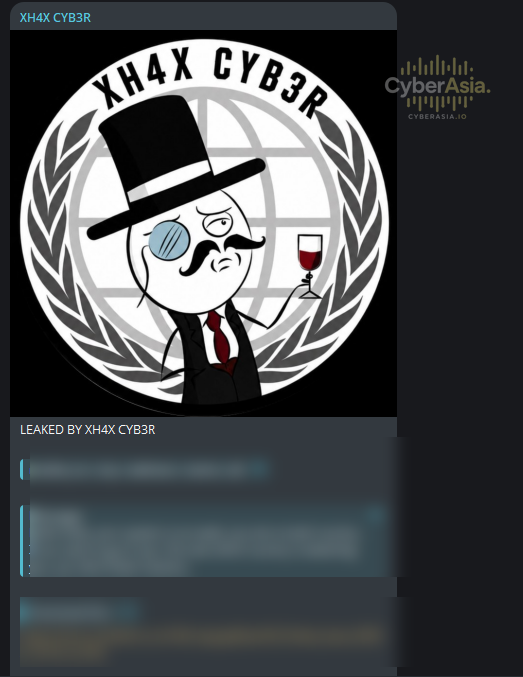
Beyond academic portal breaches, XH4X CYB3R uploaded an extensive repository containing structured personal records. The data schema includes primary contact details, residential addresses, full names, and demographic identifiers.
> COMPROMISED_DATA_RECORDS // EXFILTRATION_LOGS
- Exfiltrated Entities: Khalsa College, UKF College of Engineering, National Citizen Directories
- Leaked Schema: mobile_no, city, address, name, email_address
- Delivery Mechanism: Direct unindexed cloud shares and dark web mirror links
- Threat Posture: High risk of targeted phishing, identity theft, and credential stuffing against victims
Federal Portal Disruption: CCRAS Outage
In addition to database exfiltration, the group targeted India’s Central Council for Research in Ayurvedic Sciences (CCRAS) hosted under the National Informatics Centre (nic.in) domain. Telemetry probes documented sustained downtime across worldwide monitoring nodes, causing complete gateway timeouts for citizens and medical researchers seeking official health advisories.
> TARGET_INFRASTRUCTURE // DISRUPTION_TELEMETRY
- Primary Target: Central Council for Research in Ayurvedic Sciences (
ccras.nic.in) - Hosting Infrastructure: National Informatics Centre (NIC) Public Subnets
- Observed Status: Complete HTTP 502 / 504 gateway outage and dropped TCP handshakes
- Attack Method: Distributed Layer 7 HTTP application-layer flood
Threat Actor Attribution: The Rise of XH4X CYB3R
Operating under a stylized gentleman-meme avatar featuring a top hat, monocle, and wine glass, XH4X CYB3R has established itself as an active participant within the Indonesian hacktivist sphere. The group frequently conducts targeted scanning for unpatched SQL injection vulnerabilities, misconfigured administrative endpoints, and exposed web shells across South and Southeast Asian targets.
This campaign aligns with recurrent cross-border cyber hostilities between Indonesian and Indian hacktivist circles. Collective operations often surge following regional political friction, with actors deploying automated web vulnerability scanners and crowdsourced DDoS stresser panels to deface websites and dump administrative data.
Mitigation Recommendations
For Academic Institutions and Government Web Administrators:
- Remediate SQL Injection Vulnerabilities. Perform comprehensive source code audits on student admission forms, search parameters, and legacy administrative portals. Enforce parameterized queries and prepared statements across all database interactions.
- Deploy Web Application Firewall (WAF) Behavioral Defenses. Implement intelligent rate limiting and geo-blocking controls to absorb volumetric Layer 7 DDoS attacks and block automated vulnerability scanners.
- Enforce Database Encryption at Rest. Encrypt sensitive tables containing student and faculty PII to prevent plaintext readability in the event of unauthorized exfiltration.
- Mandate Multi-Factor Authentication (MFA). Require MFA for all academic portal logins, administrative dashboards, and remote server management access.
For Affected Students, Faculty, and Internet Users:
- Be alert to targeted phishing emails, SMS spam, or unexpected phone calls claiming to originate from college administrative offices.
- Immediately change passwords on academic email accounts and any personal accounts sharing similar credentials.
- Monitor personal bank accounts and financial services for unauthorized inquiries or suspicious verification prompts.
> DISCLAIMER
This report is compiled strictly for educational, research, and defensive threat awareness purposes. CyberAsia documents cyber security incidents utilizing verified open-source intelligence and raw threat telemetry. CyberAsia does not endorse, facilitate, or condone unauthorized access to computer systems or malicious digital disruption.
Notice: This threat intelligence investigation forms part of CyberAsia’s continuous monitoring of Asia-Pacific hacktivist operations and critical data leaks. Verified security researchers may contact our editorial desk for validated threat indicators.
Disclaimer: The information presented in this threat intelligence report is for educational and cybersecurity research purposes only. CyberAsia reports on cyber incidents to help organizations understand and defend against emerging threats. We do not provide hacking instructions, host stolen data, or endorse illegal activities.
> INTELLIGENCE_NOTICE
The report above detailing Indonesian Group XH4X CYB3R Declares War on India: Massive Data Leak and DDoS Assault is part of the CyberAsia public archive. For organizations requiring breach validation schemas, credential exposure auditing, and PII containment protocols for data leak events, please refer to our Secure Drop or contact the research desk.

> ABOUT_AUTHOR: Haider
> related_intel --suggest
data leak
 data leak
France Utilitaires Data Breach: LunarisSec Exposes 8 Records
> read data leak