 hacktivism
~/ › hacktivism › article
hacktivism
Indonesian Hackers Breach Russian Geological Engineering?
> By Haider | Aug 25, 2026 | 6 min read
STRATEGIC_INCIDENT_ALERT // INDUSTRIAL_WEB_EXPLOITATION
ORIGINATING_THREAT: TEAM KICAU KICAU DUNIA
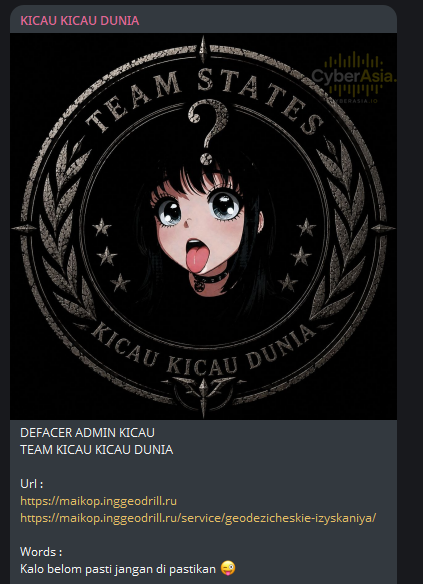
In a newly observed cross-border cyber assault originating from the Southeast Asian underground, Indonesian threat actors have successfully breached public-facing infrastructure within the Russian Geological Engineering Sector. Operating under the banner of Team Kicau Kicau Dunia, an operator designated as Admin Kicau executed an unauthorized website defacement and server modification against Russian industrial survey contractor Inggeodrill.
> TABLE_OF_CONTENTS [toggle]
- > 1. Incident Overview and Target Infrastructure Profiling
- > 2. Exploitation of the Russian Geological Engineering Sector
- > 3. Erratic Targeting Matrix and Ambiguous Threat Motives
- - Real-Time Rebranding: Pivot to ‘BaseKnox’ and Selective Post Scrubbing
- > 3. Technical Analysis: Web Exploitation Vectors in Industrial Portals
- > 4. Actionable Defense: Mitigating Web Exploitation in Industrial Sectors
- - For Enterprise Defenders and Industrial Webmasters:
- - For the General Public and Digital Observers:
1. Incident Overview and Target Infrastructure Profiling
The target of the offensive operation is Inggeodrill (operating via domain inggeodrill.ru and regional node maikop.inggeodrill.ru), a specialized Russian engineering enterprise headquartered in Maykop, the capital of the Republic of Adygea. The firm delivers technical geological exploration, ground drilling, and geodetic surveys for regional construction, energy, and commercial infrastructure projects.
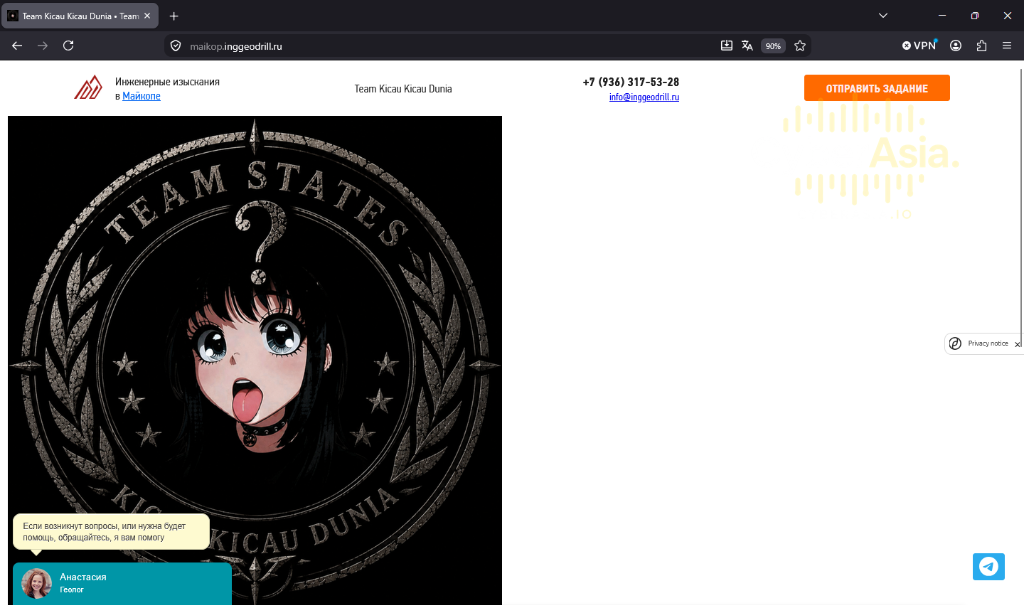
According to operational claim logs published by the threat actor, the intrusion directly compromised the company’s dedicated engineering services portal at /service/geodezicheskie-izyskaniya/ (geodetic investigations). Threat actors overrode standard web application access controls, altering directory contents and embedding their collective’s customized graphical badge onto the server’s public index.
> TARGET_INFRASTRUCTURE // INDUSTRIAL_PROFILING
- Target Entity: Inggeodrill (Инжгеодрил) Engineering & Geological Survey Company
- Compromised Endpoint: Regional Server Node (
maikop.inggeodrill.ru) - Impacted Service Directory: Geodetic Investigations (
/service/geodezicheskie-izyskaniya/) - Sector Classification: Civil Engineering, Topographical Surveying, and Geological Drilling
2. Exploitation of the Russian Geological Engineering Sector
The breach reflects a broader trend of decentralized Southeast Asian threat groups extending their operational radar into Eastern European and Russian commercial sectors. While high-tier Advanced Persistent Threat (APT) groups frequently target defense supply chains, mid-tier collectives exploit opportunistic vulnerabilities within the Russian Geological Engineering Sector to demonstrate cross-border reach and build underground reputation.
Forensic examination of the defacement artifact indicates that the intrusion was conducted by Team Kicau Kicau Dunia, displaying their signature circular insignia marked with the emblem TEAM STATES / KICAU KICAU DUNIA alongside their distinctive defacer tagline. Rather than deploying disruptive ransomware or exfiltrating deep telemetry data, the threat actor prioritized visible web defacement and domain modification to signal technical control.
> THREAT_ACTOR_DOSSIER // ATTRIBUTION_PROFILE
- Actor Identity: Team Kicau Kicau Dunia (Affiliated with Team States)
- Executing Operator: Admin Kicau
- Regional Origin: Indonesian Cyber Underground
- Primary Operational Vector: Web Application Exploitation, CMS Backdooring, and Unauthorized Defacement
3. Erratic Targeting Matrix and Ambiguous Threat Motives
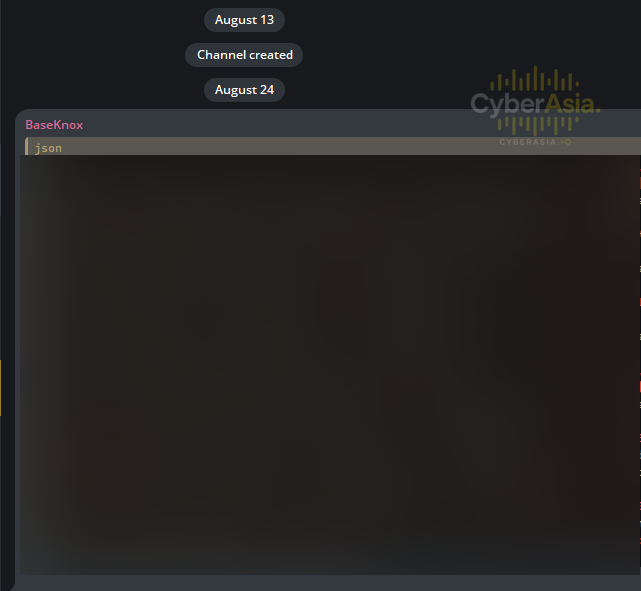
A deeper forensic analysis of Team Kicau Kicau Dunia’s operational infrastructure reveals a highly disjointed, erratic targeting trajectory. Telegram telemetry indicates that while the group established its primary communications channel on August 13, 2026, the cell remained completely dormant until suddenly initiating high-frequency offensive operations on August 24, 2026.
Crucially, the collective’s attack sequence exhibits zero ideological consistency or focused geopolitical doctrine. In less than 48 hours following their operational activation, the group launched rapid, opportunistic strikes across three completely unrelated geographic theaters:
> OPERATIONAL_TELEMETRY // ERRATIC_TARGET_DISPERSION
- 1. Domestic Indonesian Infrastructure: Initial testing phases and localized website defacements targeting domestic regional web servers.
- 2. Russian Industrial Engineering (Inggeodrill): Exploitation of specialized civil engineering and geological drilling portals (
maikop.inggeodrill.ru). - 3. Australian Civilian PII Leaks (BaseKnox): Exfiltration and public dumping of structured Australian resident identity records, phone numbers, and educational accounts (
catholic.edu.au).
This chaotic dispersion suggests that Team Kicau Kicau Dunia is not operating on behalf of a state apparatus or pursuing a structured ideological manifesto. Rather, their modus operandi aligns with opportunistic vulnerability scanning, deploying automated tools across random global IP blocks to harvest low-hanging credentials and execute web defacements solely for underground notoriety, channel subscriber growth, and collective posturing.
Real-Time Rebranding: Pivot to ‘BaseKnox’ and Selective Post Scrubbing
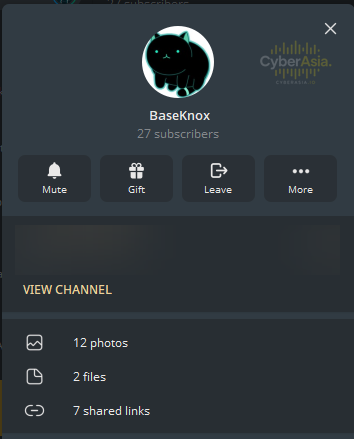
Illustrating the unstable, evolving governance typical of nascent threat cells, the collective executed an abrupt real-time rebranding during the drafting of this report. The channel administrators abandoned the initial Team Kicau Kicau Dunia moniker, officially renaming the organization to BaseKnox while updating their channel link to [Redacted Channel Handle], retaining a vestigial reference to their parent Team States alliance.
Concurrently, the operators engaged in selective post scrubbing, deleting multiple historical attack mirrors and defacement claims from their public broadcast timeline. This chaotic administrative restructuring indicates an amateur collective experiencing internal leadership reorganization, attempting to shed its initial casual defacer image in an effort to present a more formidable, structured cyber syndicate brand.
3. Technical Analysis: Web Exploitation Vectors in Industrial Portals
Defacements of this nature typically leverage unpatched Content Management System (CMS) vulnerabilities, exposed file upload handlers, or misconfigured administrative endpoints. In alignment with tactics documented in the MITRE ATT&CK Framework under Exploit Public-Facing Application (T1190), threat actors deploy automated scanners to locate vulnerable endpoints across specific top-level domains (.ru), subsequently executing arbitrary file write commands to replace default index files.
As detailed in CyberAsia’s comprehensive analysis on Underground Hacktivist Alliances and regional campaigns like the XH4X CYB3R offensive briefing, Indonesian hacktivist collectives regularly share exploitation scripts and target lists to conduct rapid waves of web compromises across international boundaries.
4. Actionable Defense: Mitigating Web Exploitation in Industrial Sectors
Protecting commercial and engineering web portals against opportunistic defacement requires robust application hardening and strict access perimeter controls.
For Enterprise Defenders and Industrial Webmasters:
- Implement File Integrity Monitoring (FIM). Deploy automated FIM agents across web root directories (
/public_html,/var/www) to instantly detect, alert, and revert unauthorized file modifications or index replacements in real time. - Restrict File Upload Handlers and Enforce Web Application Firewalls (WAF). Follow CISA Web Security Guidelines by strictly sanitizing file upload extensions, storing user uploads outside executable directories, and tuning WAF rule sets to block remote shell injection and path traversal attempts.
- Harden CMS and Administrative Login Portals. Apply multi-factor authentication (MFA) and IP restriction on administrative interfaces (
/admin,/wp-admin), while ensuring all third-party plugins, themes, and server dependencies are updated immediately upon vulnerability disclosure. - Disable Unnecessary Directory Listing and Execute Permissions. Ensure web server configurations (Nginx/Apache) disable directory browsing and prohibit script execution within static asset directories. For technical incident disclosures, visit the CyberAsia Secure Drop.
For the General Public and Digital Observers:
- Avoid Interacting with Defaced Portals. Defaced websites may host secondary malicious redirect scripts, clickjacking frames, or rogue payloads designed to infect visiting browsers.
- Verify Organizational Availability Through Official Communication Channels. When commercial engineering services appear offline or defaced, cross-check service continuity via direct organizational support contacts rather than untrusted third-party mirrors.
Disclaimer: The information presented in this threat intelligence report is for educational and cybersecurity research purposes only. CyberAsia reports on cyber incidents to help organizations understand and defend against emerging threats. We do not provide hacking instructions, host stolen data, or endorse illegal activities.
> INTELLIGENCE_NOTICE
The report above detailing Indonesian Hackers Breach Russian Geological Engineering? is part of the CyberAsia public archive. For organizations requiring real-time attack telemetry, check-host latency records, and edge firewall mitigation strategies for hacktivism incidents, please refer to our Secure Drop or contact the research desk.

> ABOUT_AUTHOR: Haider
> related_intel --suggest
hacktivism
 Threat Intelligence
Hacker vs Hacktivist: 5 Dangerous Differences in Modern Cyber Warfare
> read hacktivism