 hacktivism
~/ › hacktivism › article
hacktivism
Hashtag Diplomacy vs Real Power: The Truth Behind Underground Hacktivist Alliances
> By Haider | Aug 25, 2026 | 7 min read
STRATEGIC_THREAT_DOSSIER // COALITION_DYNAMICS
RESEARCH_DESK: CYBERASIA INTELLIGENCE UNIT
In the chaotic expanse of global cyber warfare, solitary threat actors are becoming increasingly rare as collectives aggressively broadcast mutual pacts, joint operation banners, and cross-border solidarity. Unpacking the reality of Underground Hacktivist Alliances reveals a stark operational dichotomy: while a vast majority of these pacts are superficial arrangements designed purely for social media vanity and follower reach, a select tier of hardened coalitions has evolved into genuine offensive blocs that actively reinforce each other in live operations, plan joint campaigns, and coordinate simultaneous multi-team assaults.
> TABLE_OF_CONTENTS [toggle]
- > 1. The Hashtag Economy: Vanity Alliances and Clout Amplification
- > 2. The Real Power Blocs: Deeply Integrated Underground Hacktivist Alliances
- > 3. The Vulnerabilities of Alliances: Infiltration, Egos, and Underground Purges
- > 4. Actionable Defense: Mitigating Coalition-Driven Cyber Assaults
- - For Enterprise Defenders and IT Infrastructure Teams:
- - For the General Public and Digital Observers:
1. The Hashtag Economy: Vanity Alliances and Clout Amplification
A pervasive pattern across hacktivist Telegram channels is the cluttered footer caption attached to breach announcements, website defacements, and Distributed Denial of Service (DDoS) check-host screenshots. Operators routinely plaster dozens of allied hashtags, such as #TeamClout and #AllianceFront, beneath their operational claims. For the overwhelming majority of low-to-mid-tier threat groups, these arrangements represent zero joint campaign planning, zero tactical reinforcement during live operations, and zero mutual accountability.
Instead, this practice functions as an underground subscriber-farming mechanism. By tagging affiliated channels, nascent cells borrow the perceived authority of larger groups, gaming engagement algorithms and driving traffic across an interconnected web of private Telegram channels. This mutual amplification creates an illusion of a massive, unified global army when, in reality, each cell operates in total isolation, merely cross-promoting each other’s channel links without ever firing a single coordinated packet together.
> UNDERGROUND_ALLIANCE_TYPOLOGY // CLASSIFICATION_MATRIX
> UNDERGROUND_INSIGHT // THE_PAPER_ALLIANCE_PHENOMENON
Fun Fact: The “Paper Alliance” Syndrome. A curious reality within the hacktivist underground is the emergence of groups that exist solely to form alliances without ever conducting a single cyberattack. These “paper teams” invest extensive effort into designing 3D logo banners, publishing grand coalition declarations, and establishing multi-admin Telegram channels. Yet, despite displaying extensive alliance rosters in their channel bios, they exhibit zero verified offensive activity (neither launching DDoS floods nor executing web exploits), functioning purely as social clubs that thrive on aesthetic posturing before quietly going dormant.
- Surface / Hashtag Alliances: Formed strictly for follower growth, mutual reposting, and psychological posturing. Zero operational coordination, zero joint campaign planning, and zero live combat reinforcement.
- Tactical Campaign Pacts: Temporary mutual-aid pacts formed around a singular geopolitical trigger (e.g., regional diplomatic disputes), providing temporary reinforcement before quietly dissolving.
- Hardened Strategic Coalitions: Permanent federations characterized by joint campaign co-authorship, mutual operational reinforcement, synchronized simultaneous strikes on shared target lists, and unified breach publishing.
2. The Real Power Blocs: Deeply Integrated Underground Hacktivist Alliances
Beneath the noise of superficial clout-chasing lies a distinct echelon of Underground Hacktivist Alliances that command authentic operational muscle. In the underground, true alliance strength is not measured by shared backend infrastructure, as independent cells guard their private tooling jealousy. Rather, real power manifests when independent groups actively reinforce each other during live operations, co-author and launch major joint offensive campaigns under a unified banner, and synchronize simultaneous multi-team strikes against shared target lists to multiply operational disruption.
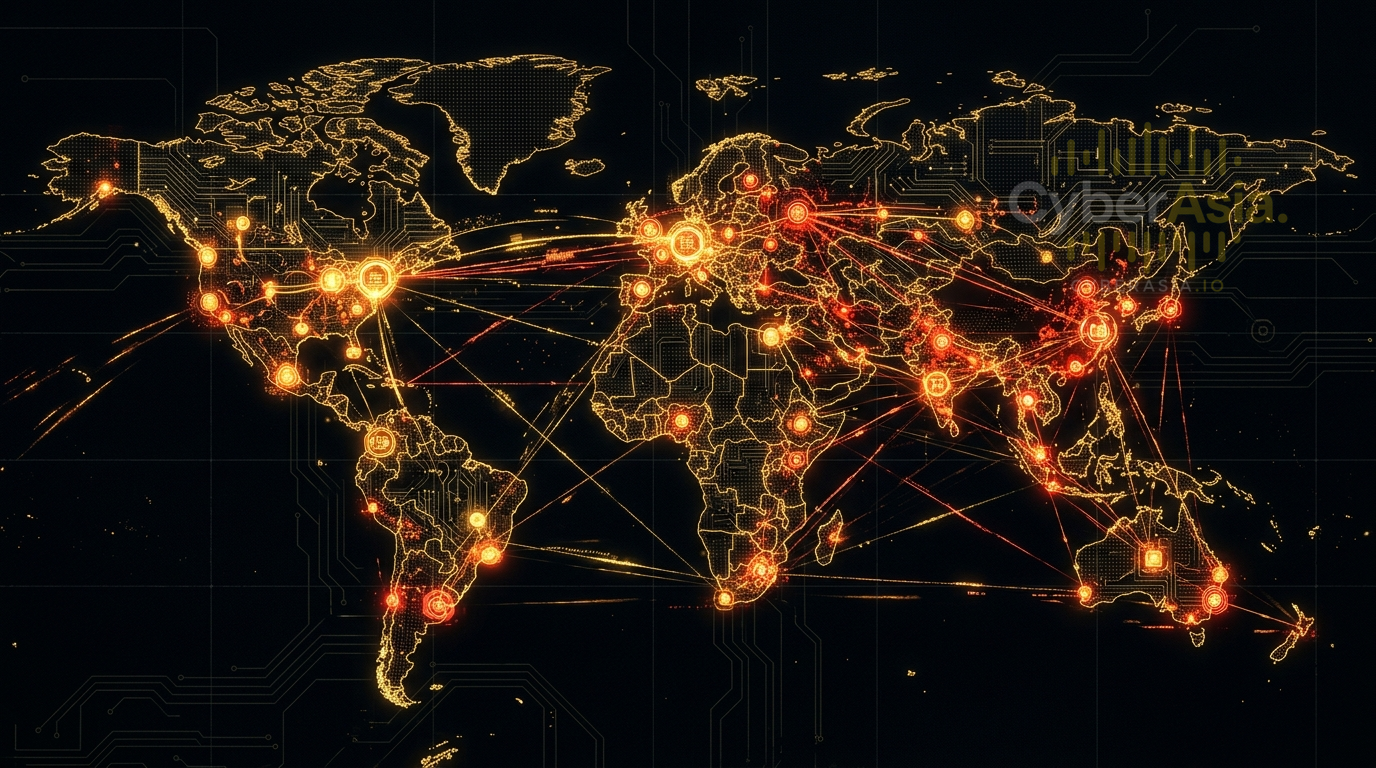
Forensic tracking across Telegram, dark web forums, and regional incident feeds highlights four prominent coalitions leading coordinated offensive operations across key geopolitical theaters:
> PROMINENT_OPERATIONAL_COALITIONS // CTI_TELEMETRY
1. Holy League (Global: Middle East & Asia)
A prominent global ideologically and religiously driven collective front primarily uniting high-capability cells across the Middle East and Asia. When a cross-border operation is declared, allied teams coordinate simultaneous Layer 7 DDoS assaults against designated target matrices, synchronize web defacements, and coordinate the timed dissemination of exfiltrated databases.
2. Dewata BlackHat (Indonesia)
A technically aggressive offensive collective originating from the Indonesian cyber underground. Members coordinate shared target intelligence, conducting joint web exploitation waves where multiple Indonesian operators simultaneously strike public-facing vulnerabilities across selected government and commercial sectors, as observed in recent regional campaigns documented in our XH4X CYB3R threat intelligence briefing.
3. Cyber Islamic Resistance Axis (CIRA – Middle East)
A geopolitically aligned digital resistance front rooted in the Middle East. CIRA operates as a disciplined, collaborative regional axis, coordinating high-impact joint operations, data leaks, and disruption campaigns against critical infrastructure, state logistics, and government web assets of opposing nations.
3. The Vulnerabilities of Alliances: Infiltration, Egos, and Underground Purges
While coordinating joint operations multiplies disruptive reach, it also exposes Underground Hacktivist Alliances to severe friction, attribution contamination, and acute counter-intelligence risks. Recent underground developments illustrate three primary fault lines:
First, internal infiltration and espionage are constant hazards. As demonstrated by recent alliance-wide blacklisting actions detailed in our Muslim Cyber Coalition investigation on JundAlNabi PK, rogue cells frequently masquerade as ideologically aligned partners while covertly harvesting intelligence on peer operators or selling unauthorized data behind their allies’ backs.
Second, doctrine violations and reputational fallout regularly fracture alliances. When undisciplined member groups breach unspoken codes of conduct by attacking civilian healthcare or primary education institutions, established coalitions are forced to execute public expulsions and alliance-wide bans to preserve their collective credibility.
Third, leadership ego clashes consistently undermine long-term cohesion. Because underground collectives lack formal legal frameworks or binding contracts, alliances frequently dissolve when rival leaders dispute credit for shared breaches, clash over public attribution, or disagree on operational command.
Fourth, the chaotic practice of cross-admin permission sharing across South Asian and Southeast Asian collectives creates critical operational security (OPSEC) failures. Collectives operating across India, Indonesia, Pakistan, and Bangladesh frequently grant broadcast admin rights to allied leaders to syndicate attack posts, inadvertently turning their channels into disorganized feeds susceptible to surveillance and hostile takeovers.
> OPERATIONAL_BLUNDER // TELEGRAM_ADMIN_SHARING_AND_INTEL_EXPOSURE
A widespread operational habit among hacktivist collectives in Indonesia, India, Pakistan, and Bangladesh is distributing Telegram channel administrative privileges to dozens of allied team leaders. Intended as a frictionless method to cross-post joint attack mirrors and amplify operational reach, this unchecked admin sharing routinely introduces severe intelligence vulnerabilities:
- Content Clutter & Message Dilution: With multiple external operators posting simultaneously, broadcast feeds become cluttered with off-topic banter, duplicate defacement logs, and irrelevant spam, diluting the collective’s strategic narrative.
- Threat Intelligence Surveillance: Open admin rings provide fertile ground for cyber threat intelligence (CTI) analysts, undercover researchers, and law enforcement units to monitor operator behavior, extract raw artifacts, and trace administrative infrastructure.
- Channel Hijacking & Rival Sabotage: When alliances fracture, malicious insiders or rival cells holding admin tokens frequently manipulate channel settings, wipe historical archives, or alter channel branding to embarrass former allies.
Observed Collectives Practicing Multi-Admin Cross-Seeding:
Prominent instances of multi-admin syndication and chaotic cross-posting have been observed across regional channels affiliated with groups such as KARAWANG ERROR SYSTEM, BNCT_1360_OFFICIAL_CHANNEL, CYBER TEAM INDONESIA, TEGAL CYBER TEAM, ArxhFox HeartBroken, and Neura-Self Cyber Team.
4. Actionable Defense: Mitigating Coalition-Driven Cyber Assaults
Defending against coordinated multi-group campaigns requires security teams to anticipate dynamic, multi-vector assaults aligned with the MITRE ATT&CK Enterprise Framework rather than isolated, predictable probes.
For Enterprise Defenders and IT Infrastructure Teams:
- Deploy Multi-Layered DDoS Mitigation. Coordinated coalitions combine volumetric network floods with application-layer HTTP floods originating from multiple independent attack tools. Organizations should follow CISA Infrastructure Defense Guidelines by maintaining always-on cloud scrubbing capable of inspecting encrypted TLS traffic and absorbing simultaneous traffic surges.
- Implement Geo-Blocking and Rate Limiting on Authentication Portals. Because hacktivist alliances mobilize operators from across diverse geographical jurisdictions during joint campaigns, applying adaptive rate limiting and geo-fencing to administrative login interfaces (/wp-admin, VPN gateways, SSH ports) dramatically curtails opportunistic brute force and credential stuffing.
- Enforce Strict Zero Trust and Web Application Firewalls (WAF). Groups within coalitions actively share target intelligence and automated vulnerability scan lists. Ensure WAF rules block known SQL injection, remote file inclusion (RFI), and arbitrary file upload pathways across public-facing web servers.
- Proactive Underground Telemetry and Threat Hunting. Monitor public and semi-private Telegram announcement channels for early campaign announcements, shared target lists, and operational hashtags to pre-emptively bolster edge defenses before synchronized attacks commence. For sensitive disclosures, refer to our CyberAsia Secure Drop.
For the General Public and Digital Observers:
- Verify Claims Through Official Sources. Hacktivist alliances often exaggerate the severity of an incident by reposting old data dumps under new operational hashtags to simulate active disruption.
- Maintain Robust Individual Cyber Hygiene. Practice strong credential management, enable phishing-resistant Multi-Factor Authentication (MFA) across personal email and financial accounts, and avoid clicking unverified links shared during trending cyber conflict campaigns.
Disclaimer: The information presented in this threat intelligence report is for educational and cybersecurity research purposes only. CyberAsia reports on cyber incidents to help organizations understand and defend against emerging threats. We do not provide hacking instructions, host stolen data, or endorse illegal activities.
> INTELLIGENCE_NOTICE
The report above detailing Hashtag Diplomacy vs Real Power: The Truth Behind Underground Hacktivist Alliances is part of the CyberAsia public archive. For organizations requiring real-time attack telemetry, check-host latency records, and edge firewall mitigation strategies for hacktivism incidents, please refer to our Secure Drop or contact the research desk.

> ABOUT_AUTHOR: Haider
> related_intel --suggest
hacktivism
 Threat Intelligence
Hacker vs Hacktivist: 5 Dangerous Differences in Modern Cyber Warfare
> read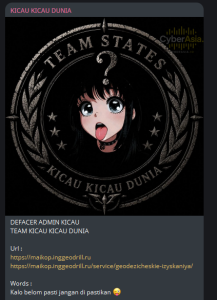 hacktivism